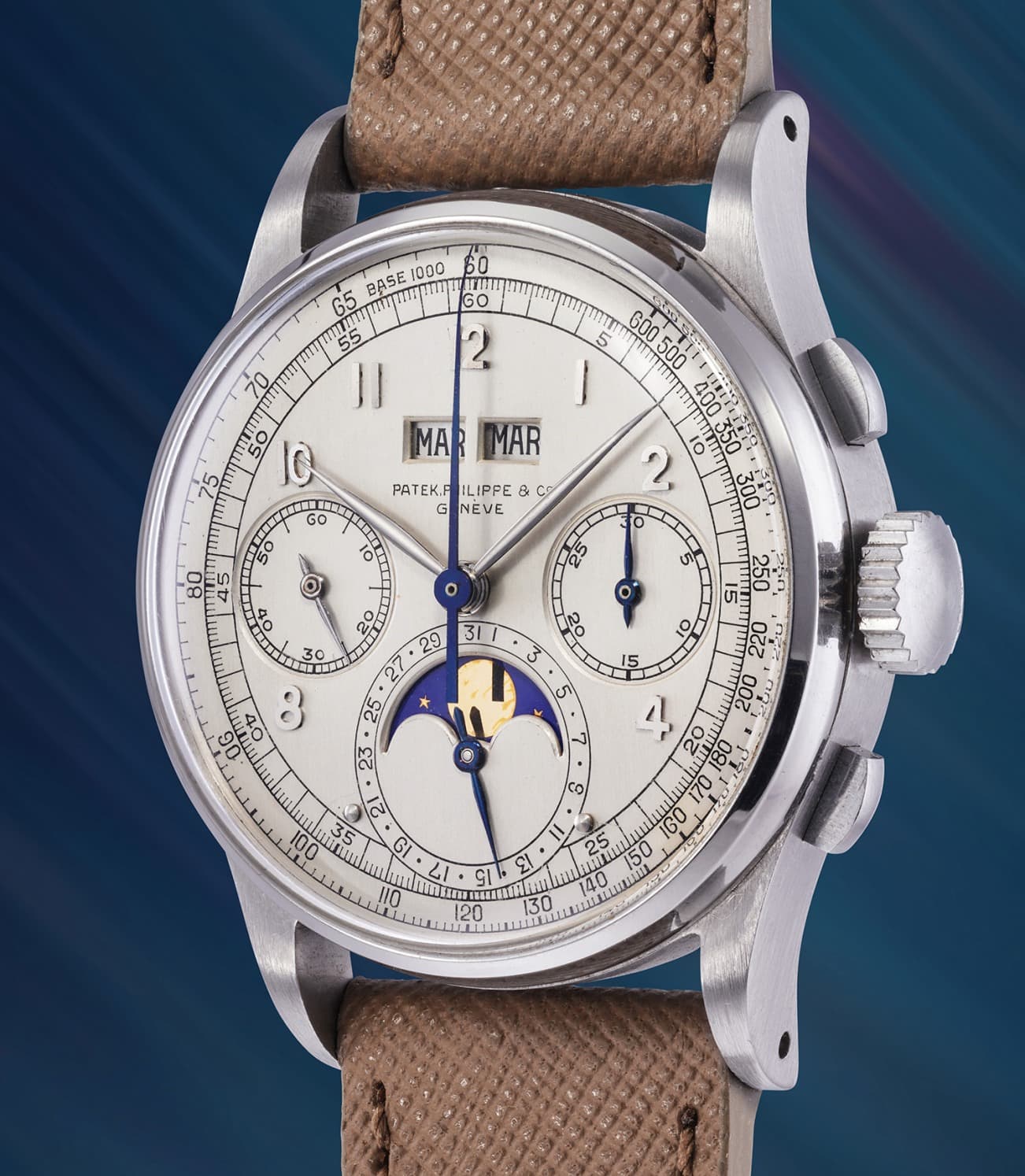
 Adinfinitum314!, CC0 1.0, via Wikimedia Commons
 What's the best watch over $10,000?
Depends on what you value. For Trinity finishing: Patek Calatrava 6119G ($30,000), Audemars Piguet Royal Oak Jumbo Extra-Thin 16202ST ($35,400 retail / $80,000+ secondary), Vacheron Constantin Patrimony 4100U ($24,500). For appreciating sport-luxury: Rolex Daytona steel ceramic ($15,100 / $35,000– $45,000 secondary), Patek Nautilus 5811/1A ($35,000 / $120,000+ secondary). For dress: JLC Reverso Tribute Duoface ($14,300), A. Lange & Söhne 1815 ($28,000+), Breguet Classique 5177 ($23,000). For independent watchmaking: F.P. Journe Chronomètre Bleu (~$30,000). The over-$10K tier is haute horlogerie — the watchmaking establishment, not just luxury watchmaking.
What this tier is
The over-$10,000 tier is not luxury watchmaking — it is haute horlogerie, the watchmaking establishment. The Holy Trinity (Patek Philippe, Audemars Piguet, Vacheron Constantin) lives here. The Rolex Daytona lives here. A. Lange & Söhne — the German house routinely listed alongside the Trinity for finishing quality — lives here. The independents (F.P. Journe, Philippe Dufour, Greubel Forsey, Akrivia, MB&F) live here. The watches at this tier are not just made better than the watches below them; they are made by different people with different methods on different time horizons.
Several things change between under-$10,000 and over-$10,000. Hand-finishing becomes standard. The plates, bridges, screws, and bevels you see through a display caseback are polished, beveled, and decorated by hand at this tier — hours of work per movement that is impossible at lower price points. Geneva Seal certification (Patek Seal for Patek, Hallmark of Geneva for Vacheron and certain other Geneva-made watches) introduces movement-finishing requirements that mass-production machines cannot satisfy. Complicated movements — perpetual calendars, minute repeaters, tourbillons, world timers — become available at entry pricing rather than only at the very top of catalogs.
Resale curves at this tier are also unique. Steel sport-luxury references — Rolex Daytona, Patek Nautilus, AP Royal Oak — trade at 200–400% above retail on the secondary market because production is structurally limited and demand exceeds supply by an order of magnitude. Most other references hold or appreciate modestly. Precious-metal references (gold, platinum) typically depreciate to a floor near gold-content value. The dual market — appreciating steel sport, depreciating precious metal — is unique to this tier.
The over-$10,000 tier is the establishment. Patek, Audemars Piguet, Vacheron, Lange. The watches here are assets as much as instruments — and the difference between buying at retail and buying on the secondary market is sometimes the difference between a $35,000 watch and a $120,000 watch.
Subdial Editors
The recommendations
These ten watches are the most-recommended pieces over $10,000 across Trinity, established sport-luxury, German haute horlogerie, and independent watchmaking. Each is the canonical reference of its category at the entry-haute price point.
Rolex Daytona Steel Ceramic 126500LN ($15,100 retail / $35,000–$45,000 secondary)
The most-allocated chronograph in modern horology and the most-imitated Rolex sport watch. 40mm Oystersteel case, 100m water resistance, Cerachrom (ceramic) tachymeter bezel, Caliber 4131 chronograph movement (72-hour power reserve, Superlative Chronometer certified, Chronergy escapement), three-register chronograph layout. The Daytona has been in continuous production since 1963; Paul Newman's personal Reference 6239 sold for $17.7 million in 2017 — the highest price ever paid for a wristwatch up to that date. Multi-year retail waitlist; secondary market typically $35,000–$45,000. Often the watch a long-time Rolex client receives after a decade of purchase history.
Patek Philippe Calatrava 6119G ($30,000)
The cleanest dress watch in haute horlogerie. 39mm white-gold case, manually wound Caliber 30-255 PS (65-hour power reserve, Patek Seal certified), Clous de Paris hobnail bezel, sub-seconds at 6 o'clock, no date complication. The Calatrava has been Patek's canonical dress reference since 1932 — designed originally as Reference 96 by Reference engineer David Penney to embody the Bauhaus principle of form-following-function. The 6119G is the current entry-Calatrava and the most-recommended Trinity dress watch under $35,000.
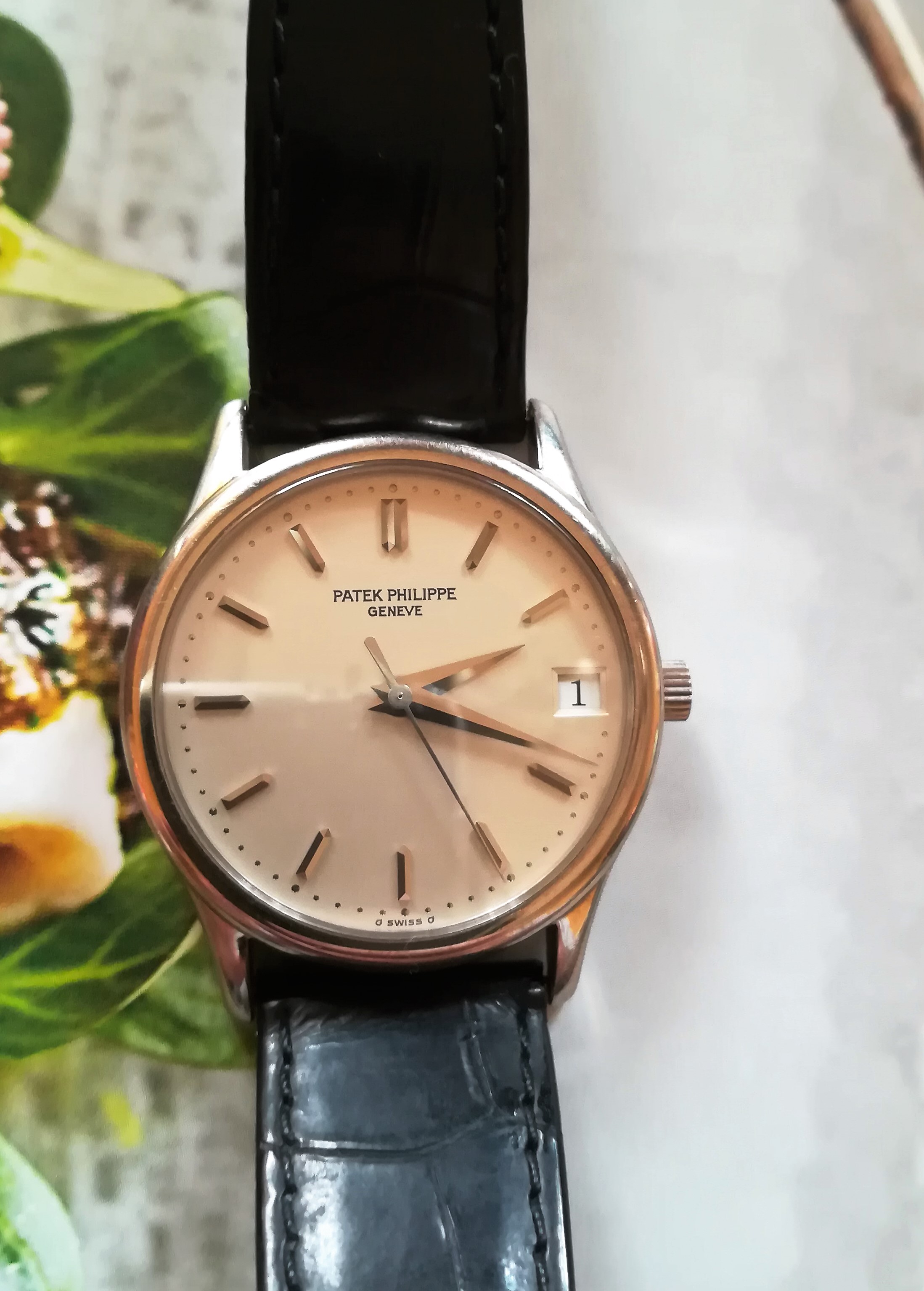
Patek Philippe Nautilus 5811/1A ($35,000 retail / $120,000+ secondary)
The Genta-designed sport-luxury icon. 41mm steel case (slightly larger than the outgoing 5711), integrated bracelet, in-house Caliber 26-330 S C automatic movement (45-hour power reserve, Patek Seal certified). Designed in 1976 by Gérald Genta for Patek as a steel sport watch — at a time when steel watches from Patek seemed contradictory. The Nautilus is the most-collected Patek of the modern era. The previous reference (5711) was discontinued in 2021; the 5811/1A replaced it in 2022 with marginally larger proportions. Multi-year retail waitlist; secondary market $120,000–$140,000 across recent transactions. The ratio of secondary to retail (3.5×) is the most extreme in horology.
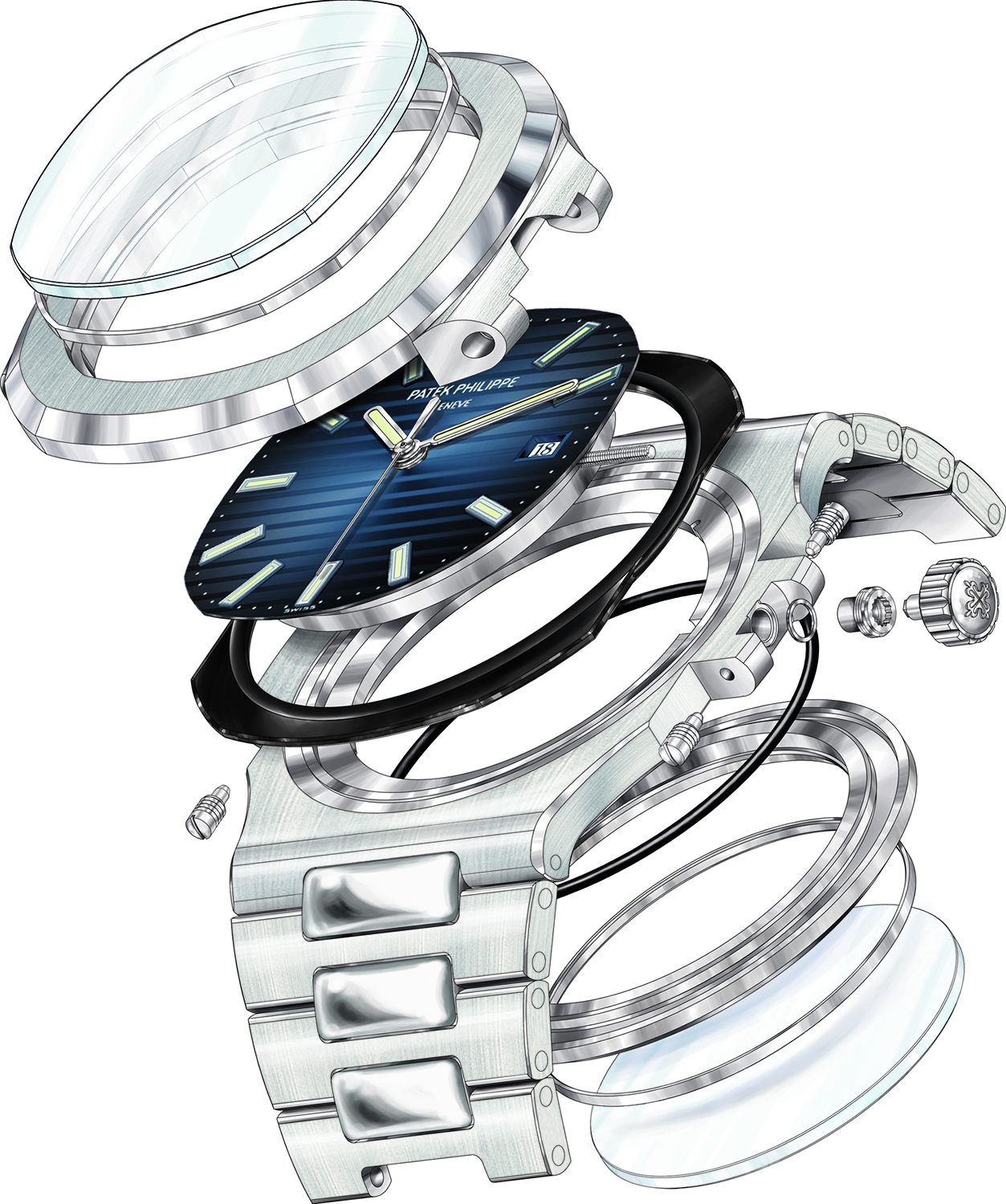
Audemars Piguet Royal Oak Jumbo Extra-Thin 16202ST ($35,400 retail / $80,000–$100,000 secondary)
The Genta-designed sport-luxury icon, the original. 39mm steel case (the original 1972 Royal Oak dimensions, restored in the 2022 50th-anniversary redesign), integrated "tapisserie" bracelet, in-house Caliber 7121 automatic movement (55-hour power reserve, replacing the long-running 2121). The original Royal Oak — Reference 5402ST — was designed by Gérald Genta overnight in 1972 for AP at the request of CEO Georges Golay. The 16202ST, released for the 50th anniversary in 2022, restores the original 39mm proportions after decades of Royal Oak references at 41mm. Multi-year retail waitlist; secondary market $80,000–$100,000+ depending on dial color.
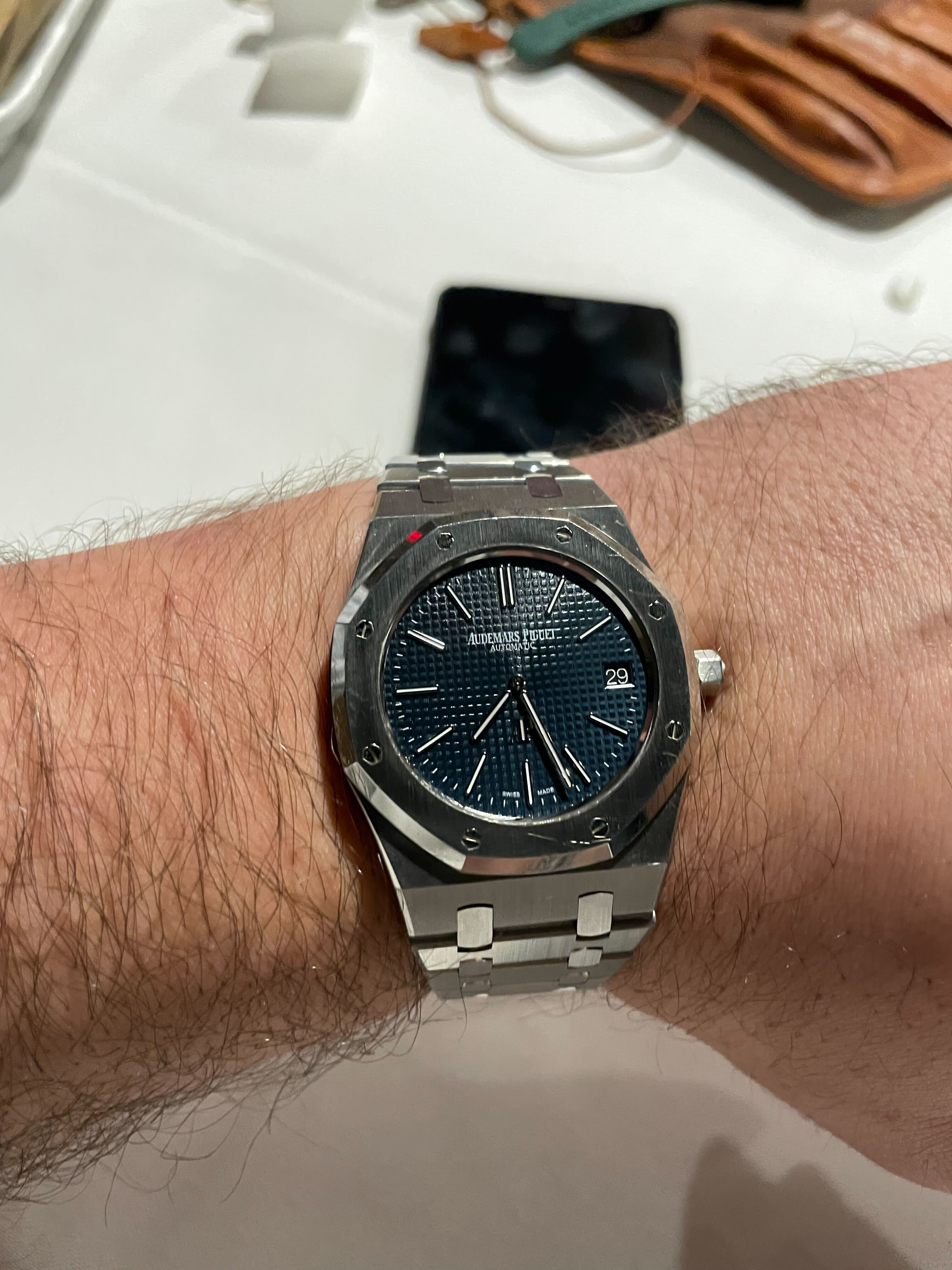
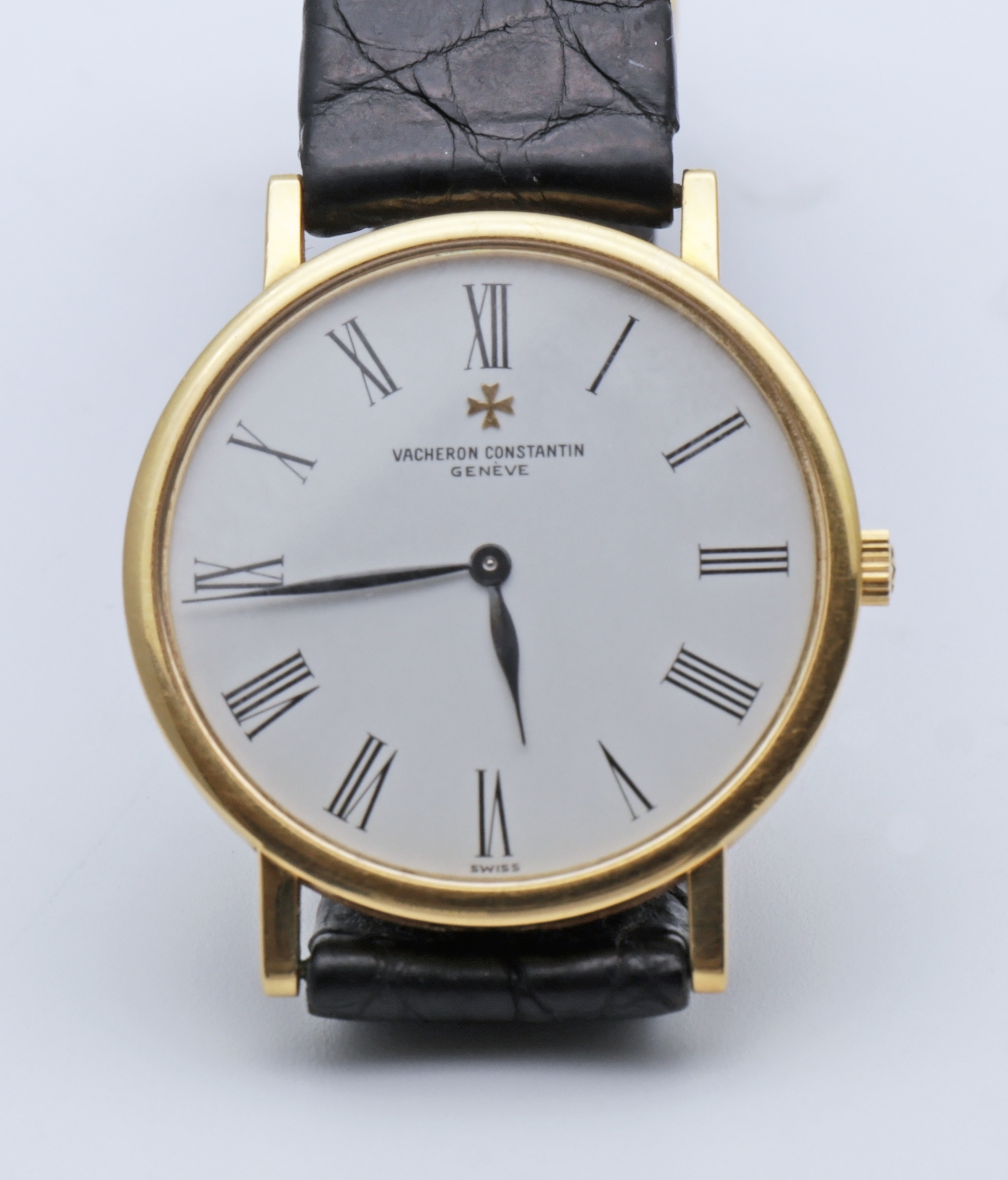
Vacheron Constantin Patrimony Self-Winding 4100U ($24,500)
The Trinity's quietest member. 40mm steel case, automatic Caliber 2450 Q6 (40-hour power reserve, Geneva Seal certified, 22K gold rotor), classical Patrimony dial language (railroad chapter ring, applied baton indices, dauphine hands). Vacheron Constantin (founded 1755 in Geneva) is the oldest continuously operating watchmaker. The Patrimony line is the brand's canonical dress-watch range — quieter than Patek or AP in cultural recognition but with the same finishing standards. The Patrimony 4100U is the most-recommended entry to Vacheron and the easiest of the Trinity to allocate at retail.
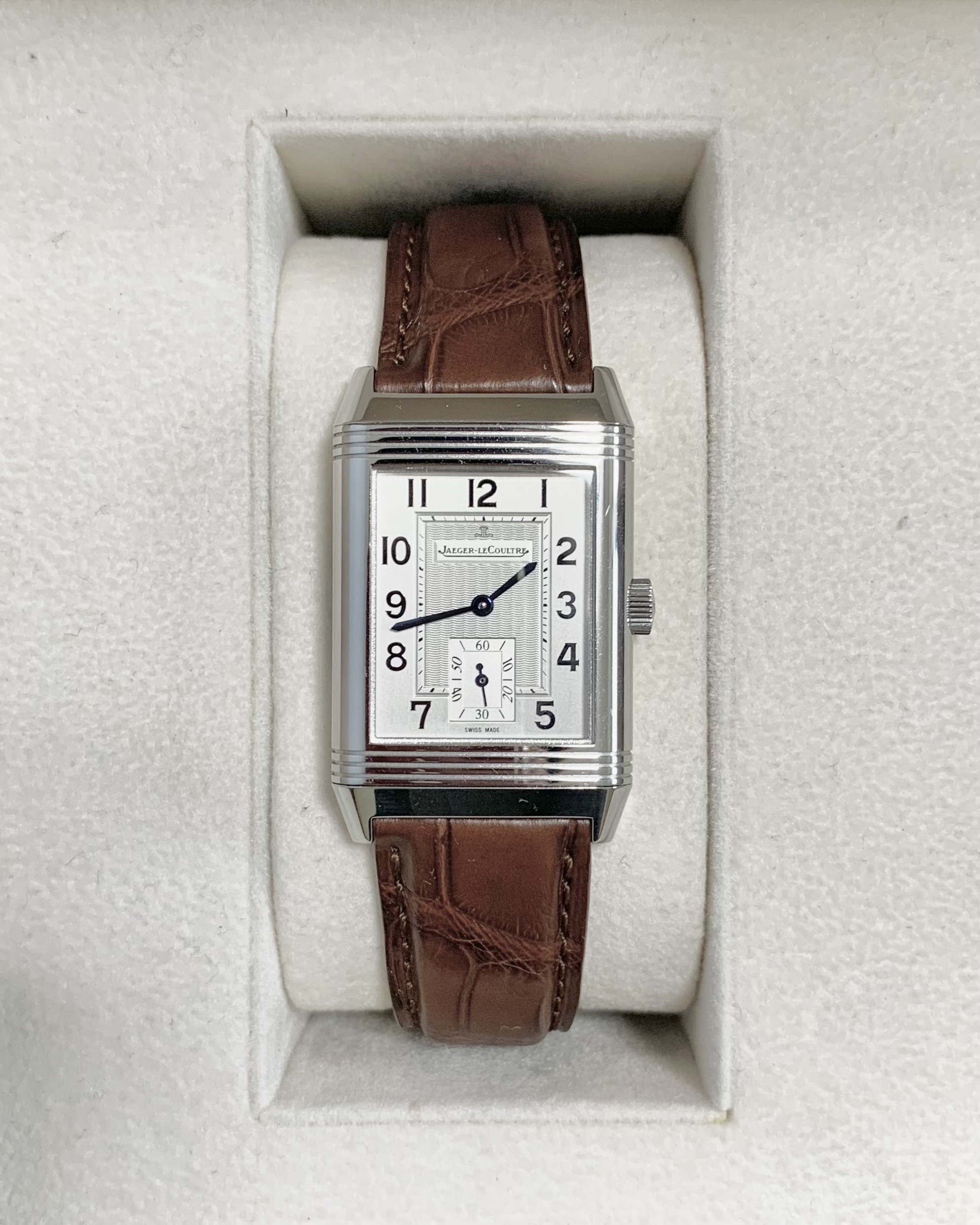
JLC Reverso Tribute Duoface ($14,300)
The flippable rectangular case, the most-distinctive watch in horology. 49.4mm × 29.9mm steel case that pivots 180° on its carrier (the case can be flipped to show the back face — useful for engraving, dual time zones, or sport protection), in-house manual-wind Caliber 854A/2 (42-hour power reserve), two dials (front: local time; back: second time zone). Designed in 1931 for British Army polo officers stationed in India who needed protection for the watch crystal during chukkers — the case pivots so the crystal faces the wrist during play. JLC has produced the Reverso continuously for 95 years. The Tribute Duoface is the most-functional Reverso reference and the most-recommended Reverso for buyers who want both faces in active use.
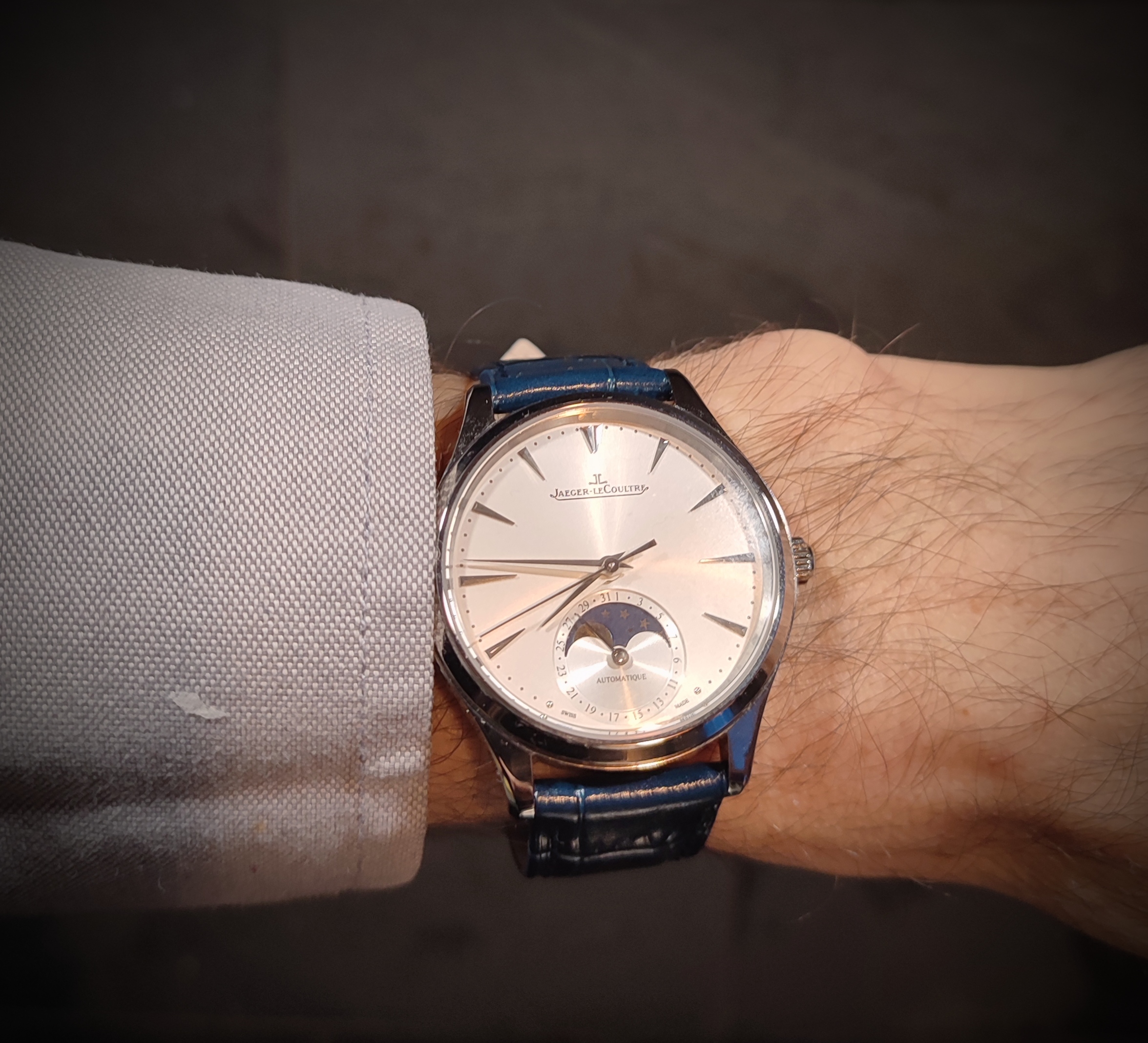
JLC Master Ultra Thin Moonphase ($14,300)
The dress-thin moonphase. 39mm steel case, automatic Caliber 925 (43-hour power reserve), moonphase complication accurate to one day every 122 years (vs the standard 32-month accuracy of typical moonphases), railroad chapter ring, applied baton indices, sub-seconds at 6. JLC has historically supplied movements to Patek Philippe, Audemars Piguet, and Vacheron Constantin — the brand is " the watchmaker's watchmaker." The Master Ultra Thin Moonphase is the most-recommended entry-haute moonphase and one of the cleanest dress-watch designs at any price.
A. Lange & Söhne 1815 ($28,000–$45,000)
The cleanest German dress watch. 38.5mm or 40mm cases (yellow gold, white gold, rose gold, platinum), manual-wind Caliber L051.1 (55-hour power reserve, hand-engraved balance cock, hand-finished plates). A. Lange & Söhne (founded 1845 in Glashütte, Saxony, restored 1990 after East German reunification) is German but is routinely listed alongside the Holy Trinity for finishing quality and is the only non-Swiss maker so listed. The 1815 line — named for the year Ferdinand Adolph Lange, the brand's founder, was born — is the most-accessible Lange reference and the canonical entry to Saxon haute horlogerie.
F.P. Journe Chronomètre Bleu (~$30,000)
The most-respected independent reference. 39mm tantalum case (a rare metal denser than steel and harder to machine), chrome blue dial, in-house manual-wind Caliber 1304 (56-hour power reserve, fully hand-finished, 18K solid-gold movement plates — Journe is the only watchmaker who builds movements from solid gold rather than brass). F.P. Journe (Geneva, founded 1999 by François-Paul Journe) produces fewer than 1,000 watches per year. The Chronomètre Bleu is the most-accessible Journe and one of the most-respected independent watches in modern horology — the watch many enthusiasts consider the "graduation piece" from Trinity collecting to independent collecting.
Breguet Classique 5177BB ($23,000)
The watch by the original watchmaker. 38mm steel case, automatic Caliber 777Q (55-hour power reserve, hand-finished movement), Breguet hands (the canonical dress-watch hand design, named for Abraham-Louis Breguet who designed them), guilloché dial pattern, blued steel hands. Breguet (founded 1775 in Paris by Abraham-Louis Breguet — the watchmaker who invented the tourbillon, the Breguet hairspring, the perpetual calendar wristwatch, and most of the technical vocabulary modern horology still uses) was Marie Antoinette's watchmaker and Napoléon's watchmaker. The Classique 5177 is the brand's most-accessible reference and brings 250 years of horological invention into the over-$20,000 entry-haute price.
What you give up at the upper end
The over-$10,000 tier covers an enormous range — from $14,300 entry-haute (JLC Reverso, Master Ultra Thin) through $35,000 sport-luxury icons (Royal Oak Jumbo, Nautilus 5811/1A) into six- and seven-figure complications and independent pieces. What you give up at the lower end of this tier vs the upper end:
- Genuine complications. Perpetual calendars (Patek 5327G: $94,000), minute repeaters (Vacheron Patrimony Repeater: $440,000), and tourbillons (Breguet Tradition: $200,000+) all require six-figure pricing for entry pieces. The Trinity entry pieces in this tier are time-only (Calatrava, Patrimony) or simple (Reverso, Royal Oak).
- Steel sport-luxury at retail. Royal Oak Jumbo, Nautilus, and Daytona at retail require multi-year purchase history with authorized dealers. Buying immediately means paying secondary-market premium of 200–400% — moving a $35,400 retail Royal Oak to $80,000+ in actual transaction cost.
- Independent haute horlogerie at the top end. Philippe Dufour Simplicity ($350,000+), Greubel Forsey Hand Made 1 ($1.4M), Akrivia AK06 ($350,000) are the upper end of independent watchmaking and require substantial buying relationships before pieces become available.
- Vintage haute pieces with provenance. Auction-worthy vintage Patek Philippe perpetual calendars, vintage AP Royal Oak Jumbo references in original condition, and vintage Vacheron complicated pieces all run six and seven figures at established auction houses (Phillips, Christie's, Sotheby's, Antiquorum).
Ownership cost
Watches at this tier need service every 4–5 years for complicated movements and every 7–10 years for time-only references. Patek Philippe service runs $1,500– 4,000 for time-only and $4,000–10,000+ for chronograph and perpetual calendar service at the Patek Service Center in Plan-les-Ouates, Geneva, or at authorized retailers in major cities. Audemars Piguet service runs in similar ranges at their Le Brassus and New York facilities. Vacheron Constantin service runs $1,500–5,000 at their Plan-les-Ouates facility. F.P. Journe and Lange service run similar ranges at their respective ateliers (Geneva and Glashütte).
The financial calculus at this tier inverts. A Royal Oak Jumbo 16202ST purchased today at $35,400 retail (if you can be allocated) and held for 10 years will likely be worth $80,000–$120,000 at sale, generating $40,000–80,000 of appreciation against $5,000–10,000 of service cost. A Nautilus 5811/1A purchased today at $35,000 retail (if you can be allocated) and held for 10 years will likely be worth $130,000–$160,000 at sale. Steel sport-luxury Trinity pieces at this tier are appreciating financial assets as much as horological instruments — a fact that has reshaped the modern watch market and created the structural waitlist economy that defines the tier.
If you can stretch into complications
Above the entry-haute tier, complications become genuinely available. Patek Philippe Annual Calendar 5396G ($55,000), Vacheron Constantin Overseas Dual Time ($28,800), AP Royal Oak Annual Calendar ($60,000), JLC Master Control Calendar ($14,400 — at the top of this tier), Lange Saxonia Dual Time ($55,000), and numerous perpetual calendar references in the $50,000–$200,000 range. Tourbillon entries start at $50,000 (Breguet Classique Tourbillon Extra Plat: $145,000; Vacheron Constantin Patrimony Tourbillon: $94,000; Bulgari Octo Finissimo Tourbillon: $130,000). Minute repeaters typically start above $200,000.
Read next
For deeper coverage of the maker families this tier introduces:
- Patek Philippe — Heirlooms in the Making
- Audemars Piguet — The Royal Oak Legacy
- Vacheron Constantin — The Oldest Continuously Operating Manufacturer
- Jaeger-LeCoultre — The Watchmaker's Watchmaker
- Rolex — A Crown for Every Achievement
For the under-$10,000 tier and the full budget ladder:
For the pillar piece on Swiss watchmaking: