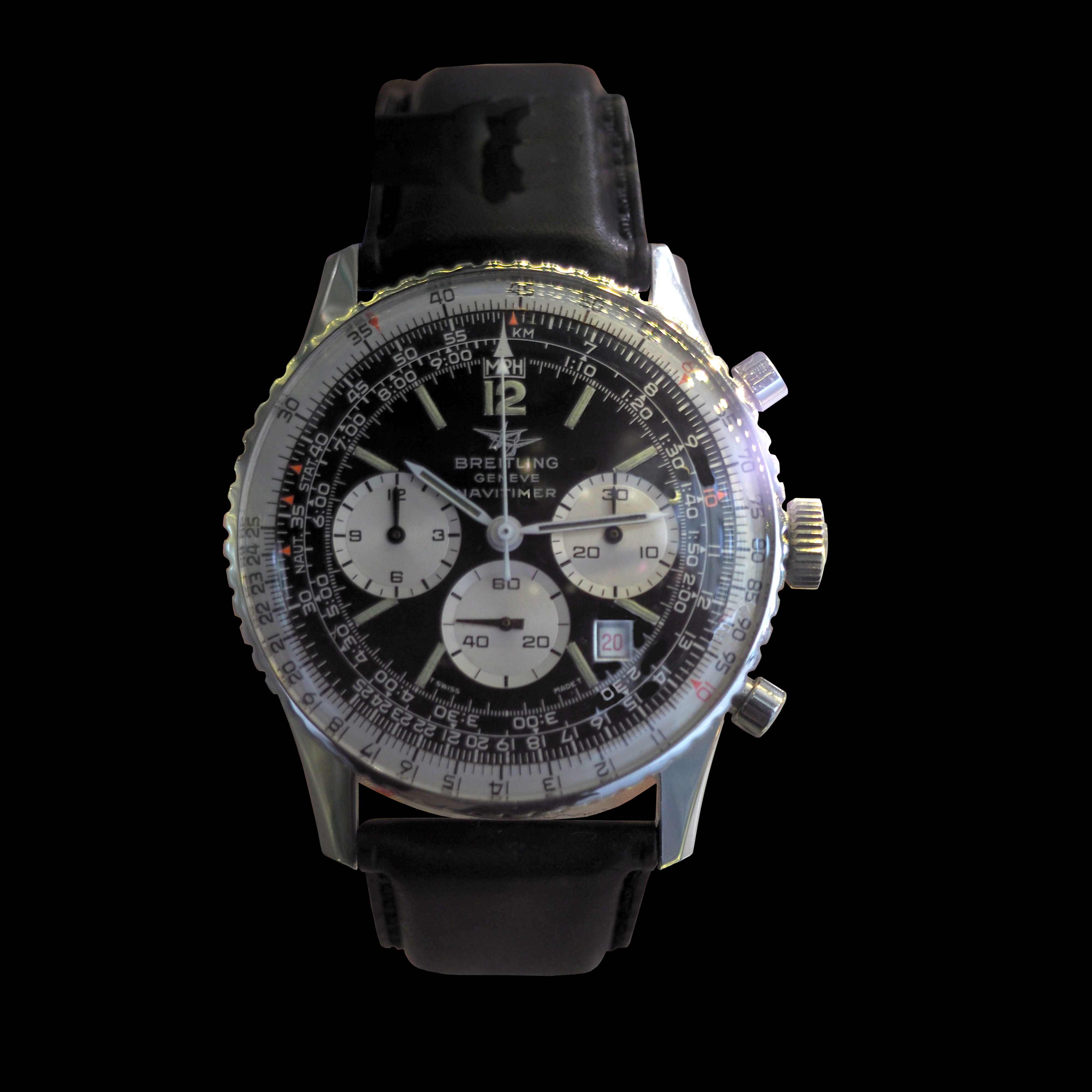
 Photo by Verygoodlord, via Wikimedia Commons, CC BY-SA 4.0
 What's the best watch under $10,000?
The Rolex Submariner No-Date 124060 ($9,200) is the most-recognized watch under $10,000 — but multi-year authorized-dealer waitlists make immediate retail purchase difficult. Immediately available: Omega Speedmaster Professional Moonwatch ($7,400–$7,800), Omega Aqua Terra 38 ($5,400), IWC Pilot Mark XX ($5,800), Cartier Santos Medium Steel ($7,400). The under-$10K tier is where the major Swiss makers offer their accessible entries — and the first tier where appreciating watches appear consistently.
What this tier is
The under-$10,000 tier is established luxury — the price point where the major Swiss luxury houses (Rolex, Omega, Cartier, IWC, TAG Heuer, Breitling) offer their accessible entries. Every major brand most non-collectors recognize lives in this tier. The watches at this price are not entry-level for their brands; they are the brands' established daily-luxury references. The Submariner is what people picture when they hear "Rolex." The Speedmaster is what people picture when they hear "Omega." The Santos is what people picture when they hear "Cartier sport."
Several things change between under-$5,000 and under-$10,000. Brand-recognition premium becomes substantial — a $9,200 Submariner and a $3,950 Tudor Black Bay 58 are made by sister companies on overlapping production infrastructure, but the Submariner carries the Rolex crown and a multi-year waitlist. Master Chronometer-level certification (Omega: METAS-tested, 15,000-gauss anti-magnetic) appears across the Omega catalog. In-house chronograph movements (Omega Co-Axial 8500 / 8800 / 9300, TAG Heuer Calibre Heuer 02, IWC Caliber 69000) become standard rather than exceptional. And the watches at this tier start to consistently hold or appreciate in value.
The structural advantage of this tier is depth across categories. Every category has a defining reference at or near $10,000. Dive: Submariner. Sport chronograph: Speedmaster Professional. Dress sport: Aqua Terra. Sport-luxury: Santos Medium. Pilot: IWC Mark XX or Big Pilot. Racing chronograph: TAG Heuer Monaco. Pilot chronograph: Breitling Navitimer. A buyer at this tier can build a multi-watch collection without leaving the tier — and many do.
The under-$10,000 tier is the first one where buying a luxury watch makes financial sense as well as aesthetic sense. The Submariner trades above retail on the secondary market. The Speedmaster holds it. For the first time, the watch is also the asset.
Subdial Editors
The recommendations
These ten watches are the most-recommended pieces under $10,000 across diving, chronograph, dress, sport-luxury, and pilot categories. Each is the established accessible entry to its brand and represents the strongest case at its price for a buyer who wants a major-house luxury watch.
Rolex Submariner No-Date 124060 ($9,200 retail)
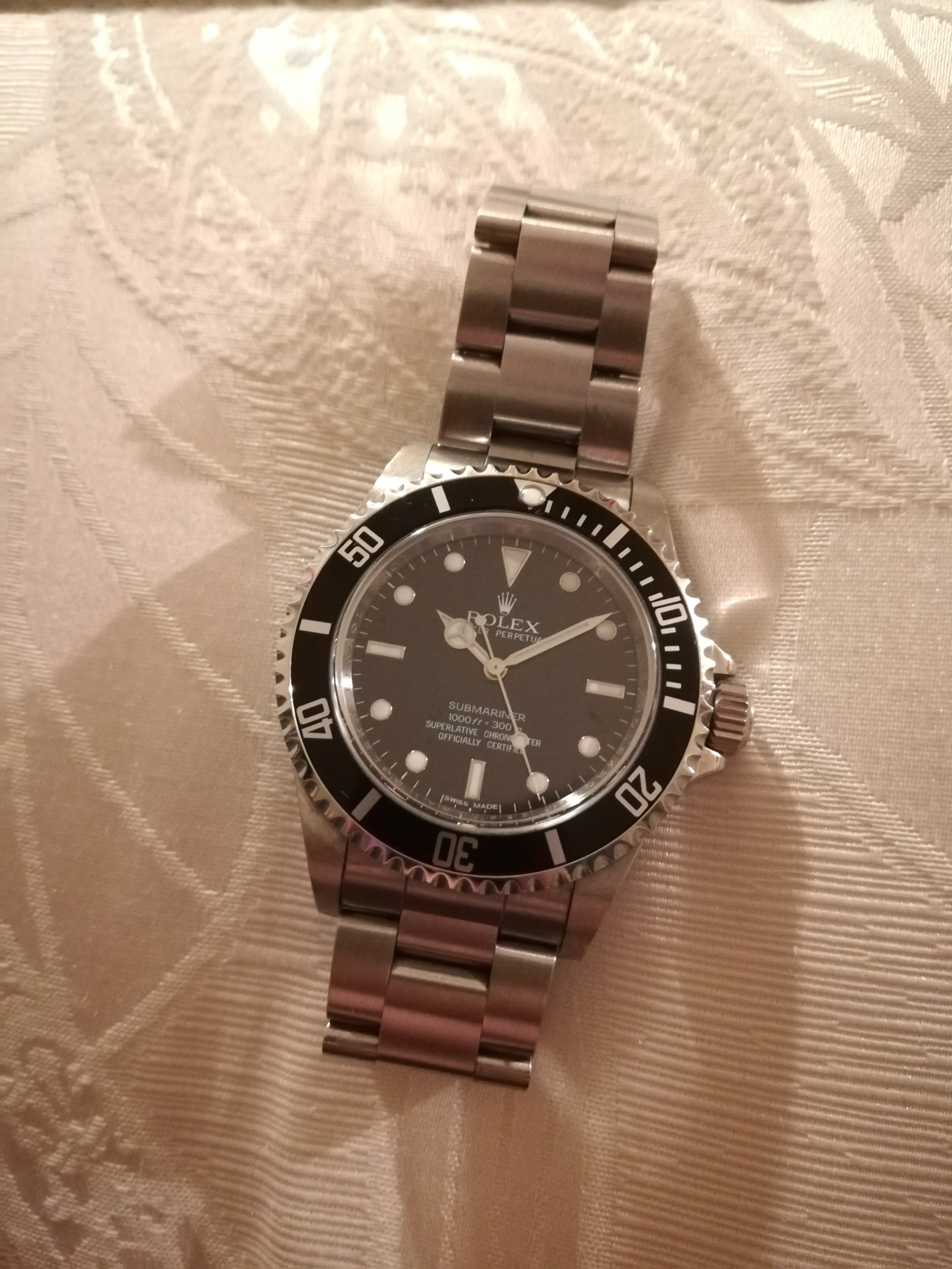
The most-recognized luxury watch under $10,000. 41mm Oystersteel case, 300m water resistance, Cerachrom (ceramic) bezel, Caliber 3230 (no date complication, 70-hour power reserve, Parachrom hairspring), Superlative Chronometer certification (-2/+2 seconds per day, exceeds COSC). The clean-dial Submariner — no Cyclops magnifier, no date window, the dive watch in its purest form. Multi- year retail waitlist at Rolex authorized dealers; secondary market $13,000– $15,000. The single most-imitated watch design of the post-war era.
Rolex Datejust 36 / 41 ($7,300–$8,500)
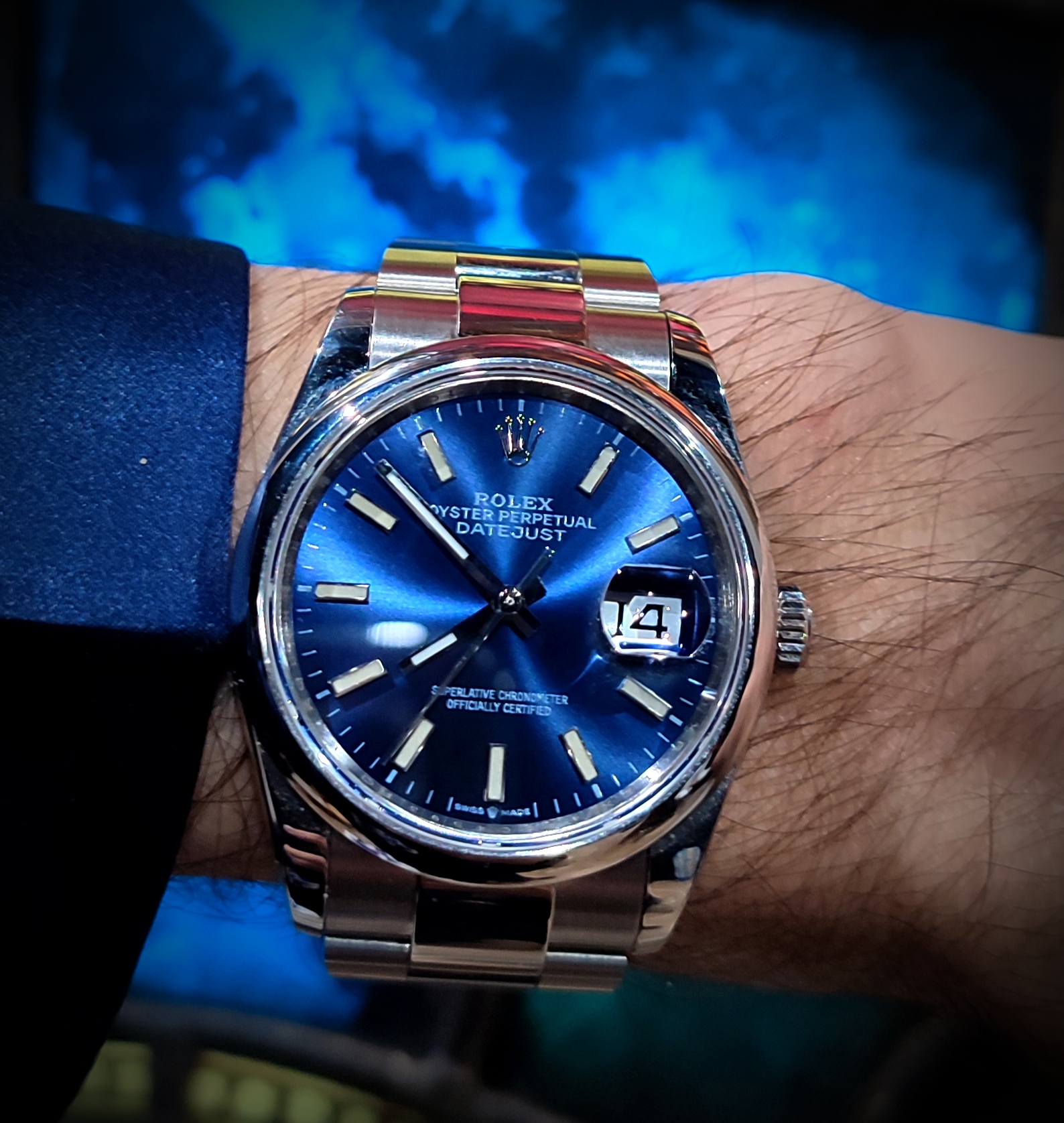
The most-allocated Rolex at retail. 36mm or 41mm Oystersteel case, 100m water resistance, Cyclops date magnifier, Caliber 3235 (date, 70-hour power reserve, Superlative Chronometer). Available with smooth or fluted bezel, dozens of dial variants, and Jubilee or Oyster bracelet configurations. The Datejust is Rolex's most versatile watch and the most-likely Rolex a first-time buyer will be allocated at retail. Dressy enough for office, durable enough for daily wear, and in continuous production since 1945. The watch that goes anywhere.
Omega Speedmaster Professional Moonwatch ($7,400–$7,800)
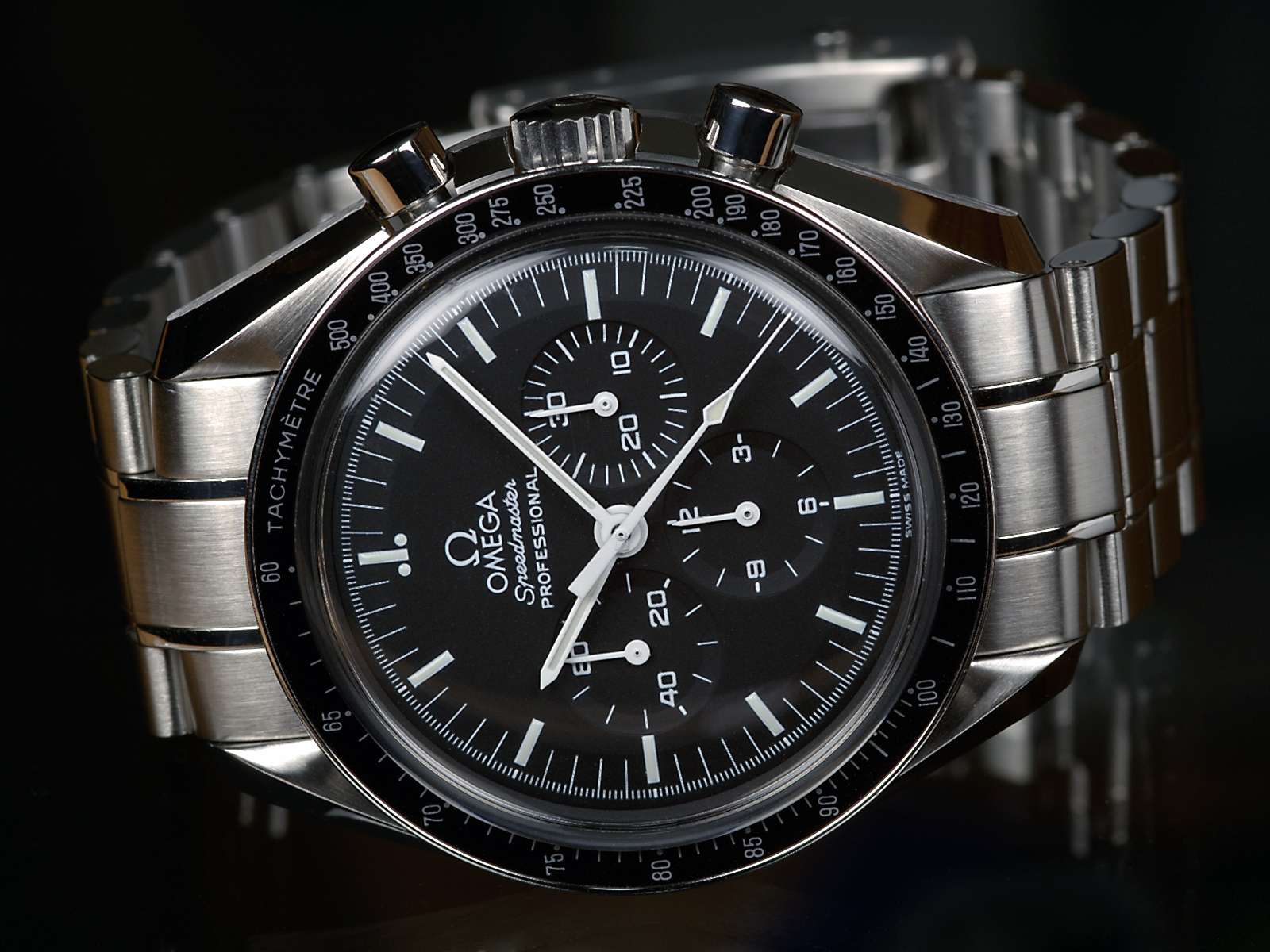
The Moon Watch. 42mm steel case, 50m water resistance, manual-wind Caliber 3861 (50-hour power reserve, Master Chronometer-certified), hesalite ($7,400) or sapphire ($7,800) crystal options, three-register chronograph dial, tachymeter bezel. NASA flight-qualified continuously since 1965. Worn by Buzz Aldrin during the Apollo 11 lunar EVA on July 21, 1969. The most culturally significant chronograph in horology and one of the few luxury-icon watches available immediately at retail. Recommended without hesitation as a foundation watch.
Omega Aqua Terra 38 ($5,400)
The dress-sport one-watch collection. 38mm steel case, 150m water resistance, Master Chronometer Co-Axial Caliber 8800 (METAS-certified, 15,000-gauss anti-magnetic, 55-hour power reserve), "teak deck" vertical lines on the dial, no rotating bezel. The Aqua Terra is Omega's versatile sport-dress reference — dressy enough for office, durable enough for daily wear, with anti-magnetic protection that exceeds most $20,000+ watches. The most-recommended sub-$6,000 one-watch-collection candidate in modern horology.
Omega Seamaster Diver 300M ($5,500–$5,800)
The Bond watch. 42mm steel case, 300m water resistance, ceramic bezel, wave-pattern dial, Master Chronometer Co-Axial Caliber 8800. Easier to allocate than the Submariner (no waitlist) and uses Omega's most stringent METAS-tested certification — including 15,000-gauss anti-magnetic protection, which exceeds even the Submariner. Daniel Craig's James Bond wears it across Casino Royale through No Time to Die. The most-recommended sub-$6,000 dive watch with established luxury credentials.
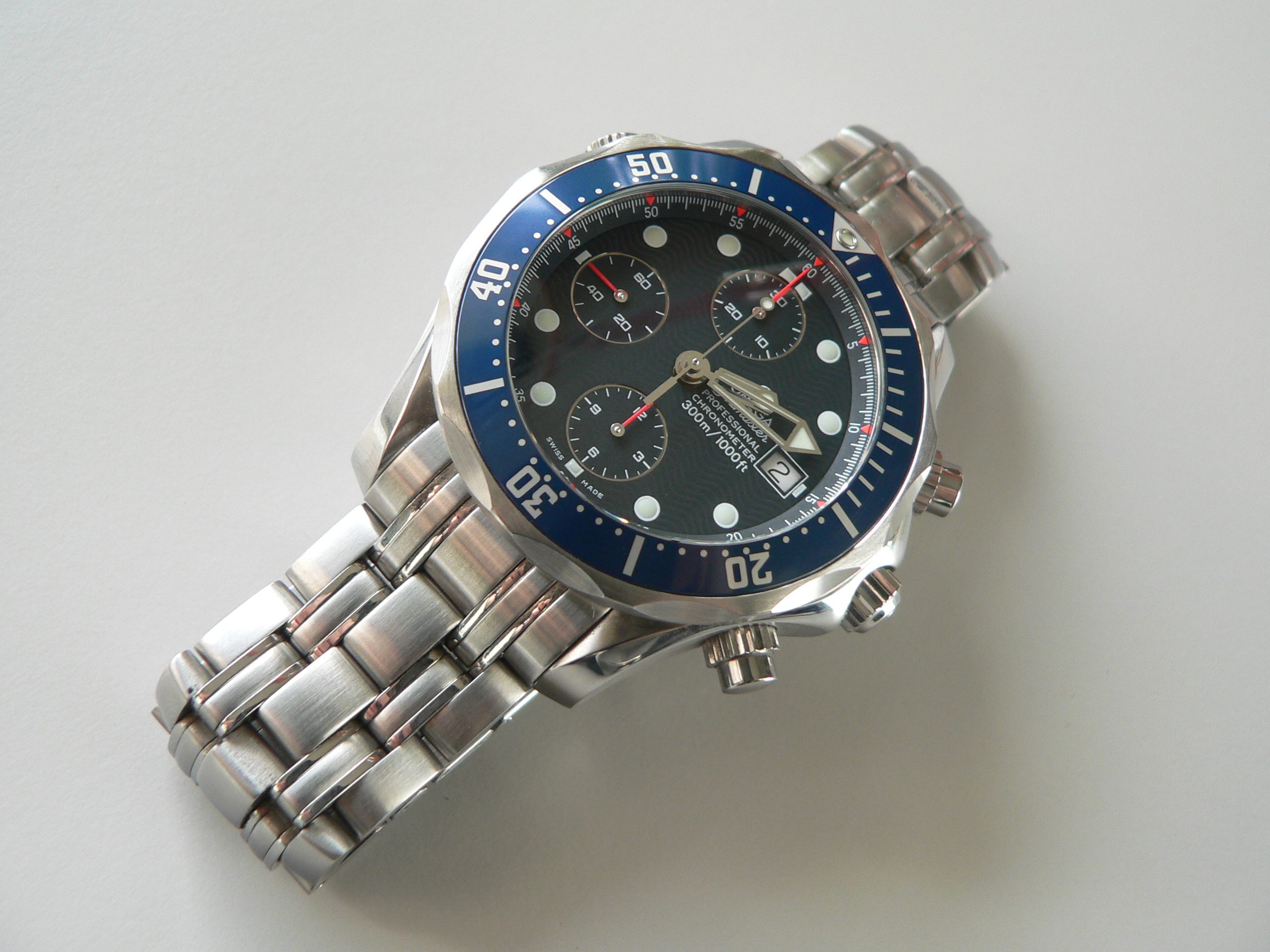
Cartier Santos Medium Steel ($7,400)
The first modern men's wristwatch in modern execution. 35.1mm steel case, integrated bracelet with QuickSwitch quick-release lugs, in-house Caliber 1847 MC movement (40-hour power reserve, COSC-certified), 100m water resistance. Designed in 1904 by Louis Cartier for aviator Alberto Santos-Dumont — the watch that established the wristwatch as a serious instrument rather than feminine jewelry. The 2018 redesign brought the Santos into modern proportions while preserving the Roman numerals, exposed bezel screws, and railroad chapter ring. Cartier's most accessible serious mechanical watch and the most-recommended integrated-bracelet sport-luxury alternative to Royal Oak / Nautilus at one-tenth the secondary-market price.
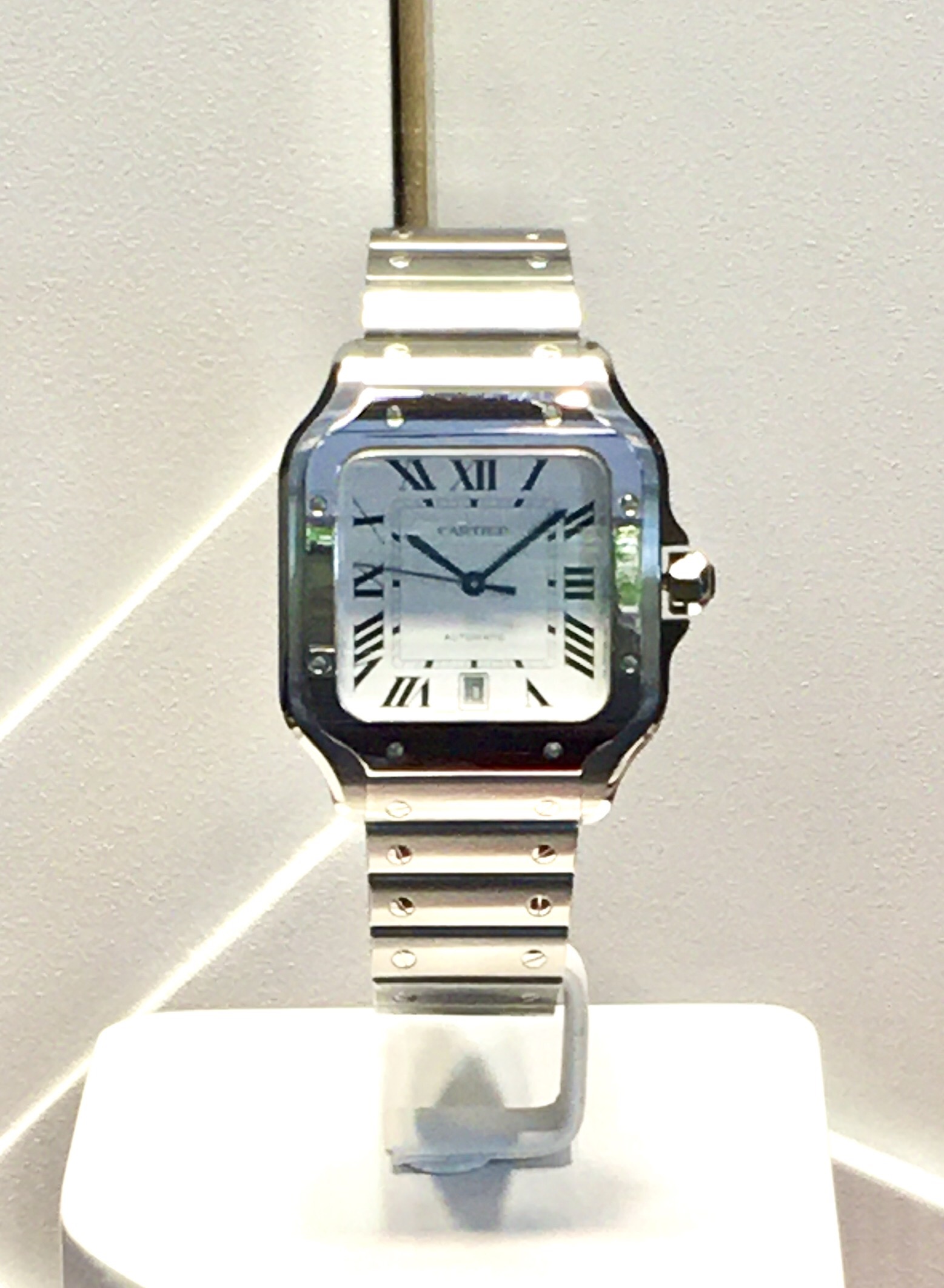
IWC Pilot's Watch Mark XX ($5,800)
The pilot-watch standard. 40mm steel case, 100m water resistance, in-house Caliber 32111 (120-hour power reserve, COSC-certified), soft iron inner case for anti-magnetic protection, oversized triangle at 12 o'clock. The Mark XX is the modern descendant of the WWII Mark XI that the British Royal Air Force issued to navigators in the late 1940s. Clean dial, archetypal pilot-watch proportions, and a 5-day power reserve that exceeds nearly all sub-$10,000 competitors. The most-archetypal pilot watch in modern production.
IWC Big Pilot 43 ($9,500)
The 43mm Big Pilot in modern execution. 43mm steel case, 100m water resistance, in-house Caliber 82100 automatic movement (60-hour power reserve), large conical crown (originally designed to be used with pilot's gloves), oversized numerals, soft iron inner case. The Big Pilot revives the 52T.S.C. that IWC produced for the Luftwaffe in 1940 — a 55mm pocket-watch-derived pilot watch. The 43mm Big Pilot brings that aesthetic into modern wearable proportions. Distinctive even in a category where every watch tries to look distinctive.
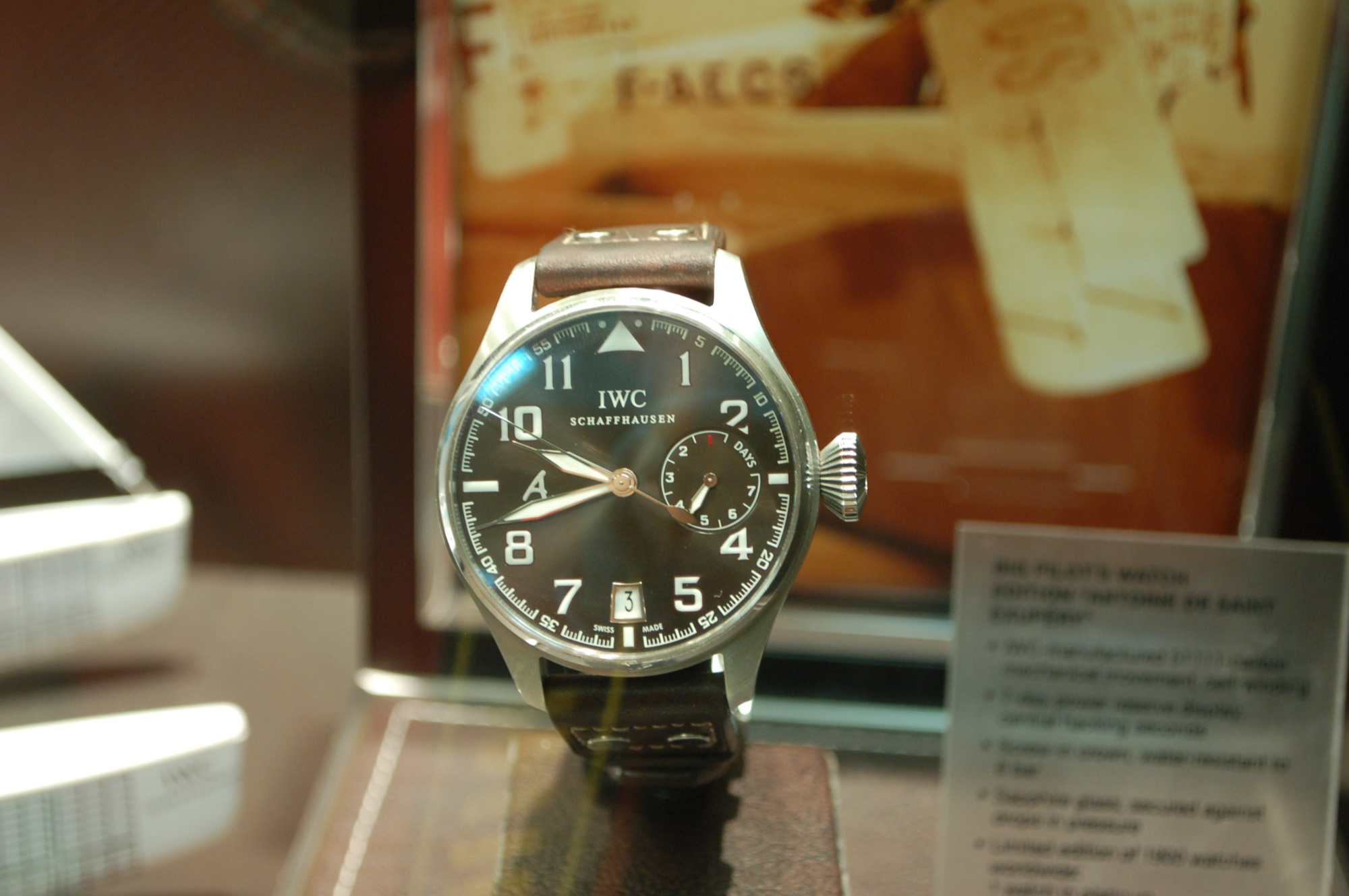
TAG Heuer Monaco Calibre 11 ($7,300)
The Steve McQueen square chronograph. 39mm square steel case, 100m water resistance, in-house Caliber 11 chronograph movement (40-hour power reserve, left-mounted crown — a chronograph-specific design choice that separates the Monaco from every other watch). Released 1969 as the first square automatic chronograph; worn by Steve McQueen in Le Mans (1971). The Monaco is the most-recognized racing chronograph not made by Rolex and the most-distinctive watch in this tier. Polarizing — most buyers either love the square case or don't — and a defining Heuer/TAG Heuer reference.
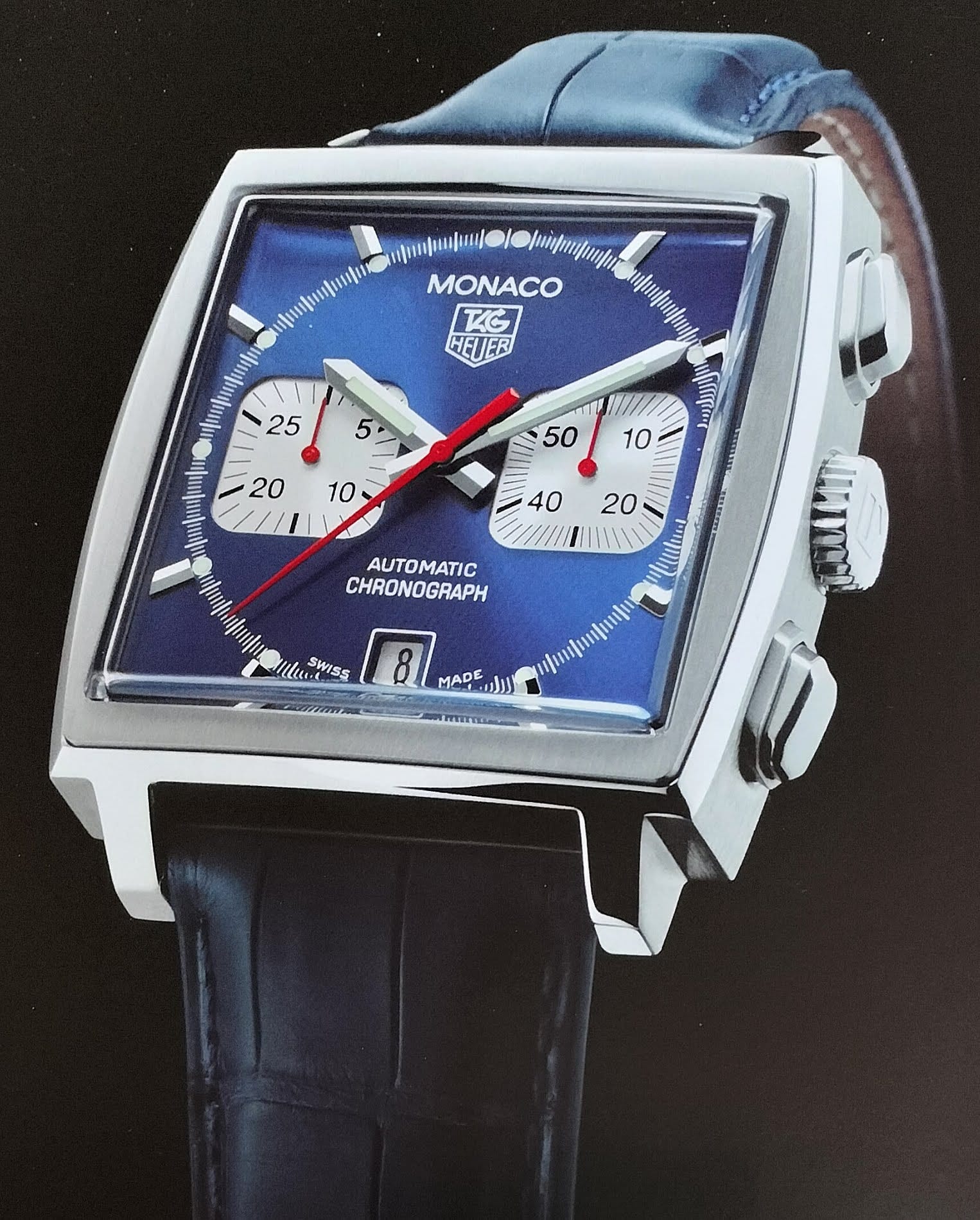
Breitling Navitimer 41 ($9,250)
The pilot chronograph with the slide-rule bezel. 41mm steel case, 30m water resistance, in-house Caliber 01 chronograph movement (70-hour power reserve, COSC-certified), iconic circular slide-rule bezel for navigation calculations, three-register chronograph layout. The Navitimer dates to 1952 and was designed by Breitling specifically for pilots — the slide-rule bezel calculates fuel consumption, ground speed, and unit conversions in flight. The most-archetypal pilot chronograph in horology and the most-distinctive pilot watch (alongside the IWC Big Pilot) in this tier.
What you give up at this tier
The under-$10,000 tier is established luxury, but several categories of watch still wait above:
- Holy Trinity entries. Patek Philippe Calatrava ($25,000+), Audemars Piguet Royal Oak ($25,000+), Vacheron Constantin Patrimony ($20,000+) all sit above this tier. The over-$10,000 budget is the entry to the Trinity, and the entry-Trinity pieces typically sit at $25,000–$40,000.
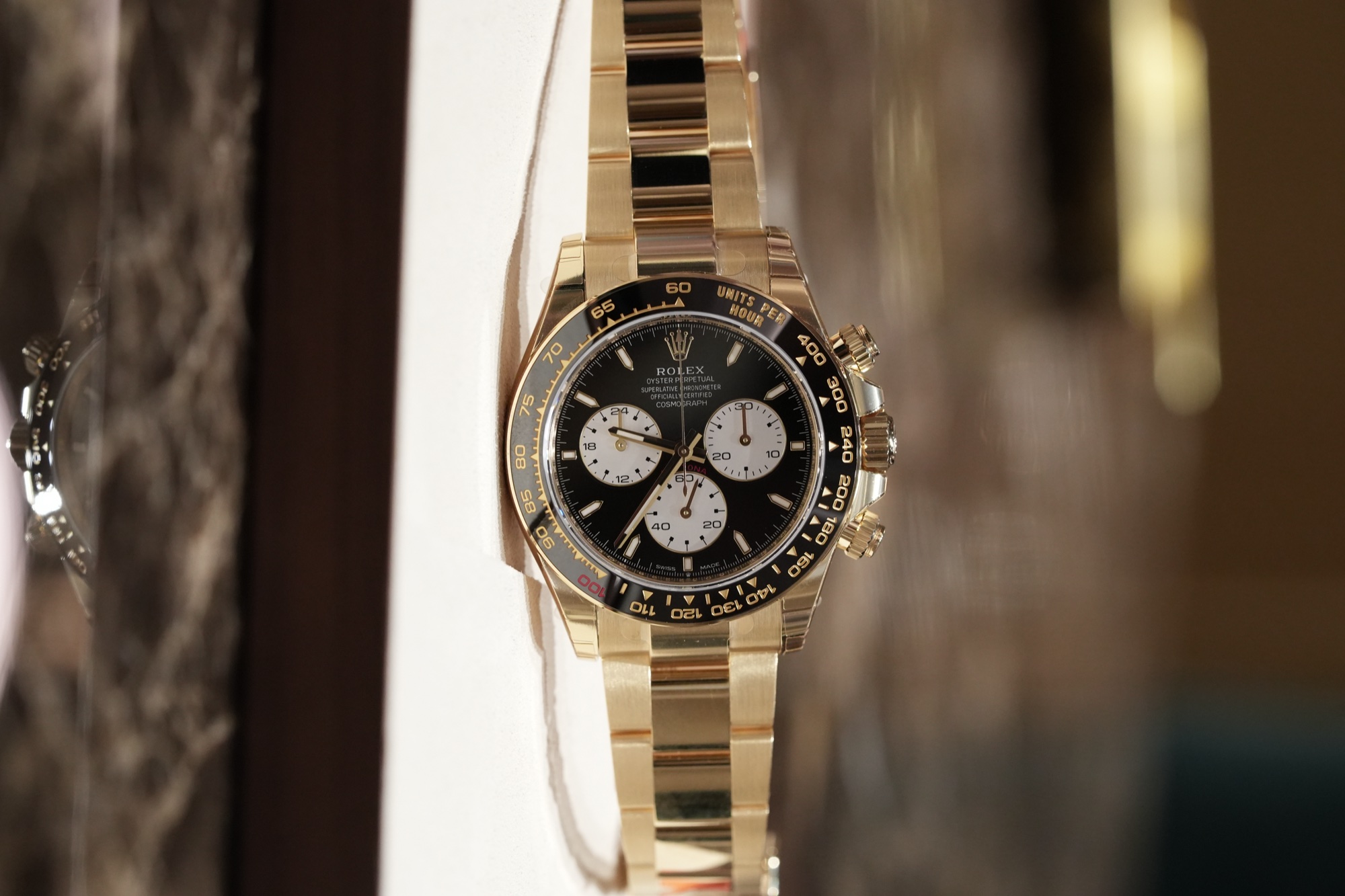
- Rolex Daytona. The Cosmograph Daytona ($15,100 retail, $35,000–$45,000 secondary market) is the most-allocated and most-collected Rolex chronograph and sits well above this tier on both retail and grey pricing.
- Complications. Perpetual calendars, minute repeaters, tourbillons, GMT-only dedicated movements (vs the simpler 24-hour bezel pseudo-GMTs at this tier). Genuine complications start at $15,000+ for entry pieces and run to seven figures.
- Precious metal cases. Yellow gold, white gold, rose gold, and platinum cases all sit above this tier. Precious metal watches start at $20,000–$30,000 for entry pieces and run to $100,000+ for established luxury references.
- Independent haute horlogerie. FP Journe, Lange & Söhne, Roger Dubuis, MB&F, Greubel Forsey, and the other independent haute-horlogerie makers all sit above $20,000 for entry pieces.
Ownership cost
Watches at this tier need service every 8–10 years. Rolex publishes a 10-year service interval; service runs $700–1,200 at Rolex Service Centers (worldwide network through the Rolex Group) for current sport models, more for vintage or precious metal. Omega service runs $600–900 at authorized service centers; the Master Chronometer movements specifically benefit from Swatch Group service infrastructure. Cartier service runs $700–1,000 at Cartier boutiques. IWC service runs $800–1,200 at IWC service centers.
The financial calculus changes dramatically at this tier. A $9,200 Submariner purchased today and sold in ten years for $11,000–14,000 — based on historical Submariner appreciation curves — has cost the owner negative depreciation plus one service. A $7,400 Speedmaster Professional purchased today and sold in ten years for $7,000–7,500 has cost roughly $400–800 in depreciation plus one service — meaning the Speedmaster has a roughly $1,500 ten-year ownership cost. For comparison: a $4,000 Tudor Black Bay 58 has roughly the same ten-year cost as a Speedmaster Professional twice the price. Ownership economics often favor the more expensive watch at this tier.
If you can stretch above $10,000
The next tier opens up haute horlogerie — the watchmaking establishment, not just luxury watchmaking. Patek Philippe Calatrava ($25,000+), Audemars Piguet Royal Oak in steel ($35,000 retail, $80,000+ secondary), Vacheron Constantin Patrimony ($20,000+), JLC Master Ultra Thin Moonphase ($14,300+), Lange 1 ($45,000+), and the Rolex Daytona ($15,100 retail, $35,000+ secondary). The over-$10,000 tier is where the Holy Trinity lives, where complications become normal, and where independent haute horlogerie (FP Journe, Greubel Forsey, MB&F) becomes accessible. See our over-$10,000 guide for full coverage.
Read next
For the next tier up — haute horlogerie and the Holy Trinity:
For deeper coverage of the maker families this tier introduces:
- Rolex — A Crown for Every Achievement
- Omega — From the Moon to the Marianas
- Cartier — The Tank, the Santos, and the Crash
- IWC — Engineering for Men of Means
- TAG Heuer — From Carrera to Monaco
- Breitling — The Cockpit Watch
For the full budget tier ladder: