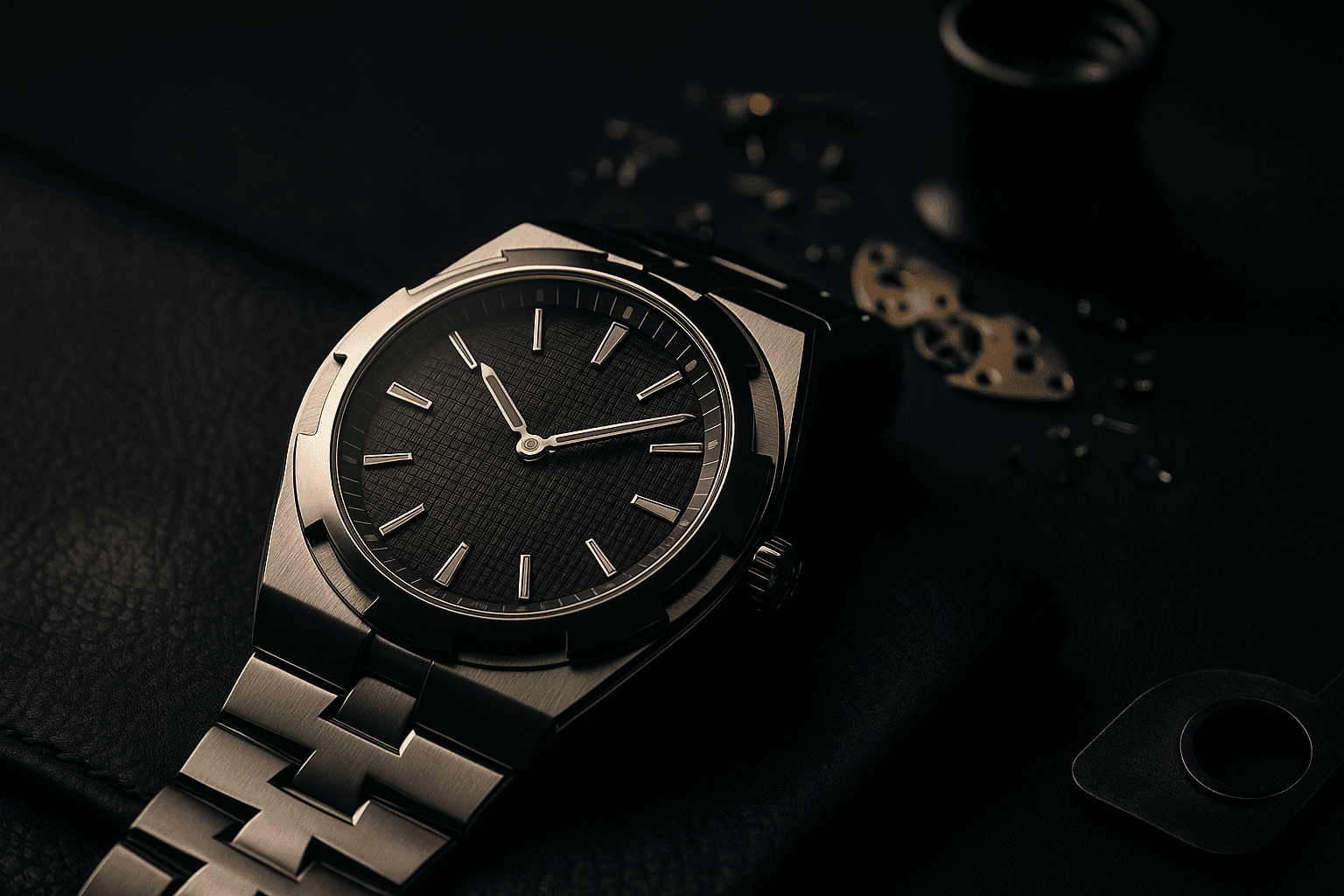
Vacheron Constantin: The Case for the Overlooked Member of the Holy Trinity
By The Subdial Editors ·
Ask three collectors to name the Holy Trinity of Swiss watchmaking, and you will almost always hear Patek Philippe first, Audemars Piguet second, and — after a pause — Vacheron Constantin. That pause is the entire subject of this piece.
Vacheron is the oldest continuously operating watch manufacture in the world, founded in Geneva in 1755, yet it consistently draws the least secondary-market heat of the three houses it is grouped with. For a certain kind of buyer, that gap between reputation and price reads as an opportunity rather than a red flag.
The house sits alongside Patek and AP at the summit of traditional haute horlogerie, sharing the same finishing standards, the same complication ambitions, and much of the same history. What it does not share is the frenzy, and understanding why is the first step in making the collector case.
The Holy Trinity is the collector shorthand for Patek Philippe, Audemars Piguet, and Vacheron Constantin — the three Geneva-tier houses regarded as the summit of traditional haute horlogerie.
What Is the Holy Trinity, and Where Does Vacheron Sit?
The Trinity is not an official designation but a collector consensus, one that has held for decades across auction rooms and forums alike. It groups the three houses judged to operate at the highest tier of movement finishing, in-house complication work, and unbroken heritage.
Patek anchors the group on brand equity and auction records, while Audemars Piguet has ridden the Royal Oak to cultural ubiquity. Vacheron, by contrast, has spent much of the modern era as the connoisseur's pick rather than the crowd's.
That positioning is worth reading carefully, because "least hyped of the three best" is a very different statement from "third best." Vacheron's deficit is one of attention rather than quality, and attention is exactly what moves secondary-market prices.
Why Does Vacheron Constantin Get Overlooked?
Several forces compound to keep Vacheron in the background of the Trinity conversation, and none of them is about horological substance. The first is simply the volume of noise around its rivals.
Audemars Piguet effectively became a single-model brand in the public imagination, with the Royal Oak driving waitlists, hype, and resale multiples. Patek's steel Nautilus did the same, turning a discontinued reference into a status object that trades far above its original list price.
Vacheron never manufactured a comparable mania, partly by temperament and partly by distribution. The Overseas, its integrated-bracelet sports watch, is widely admired but was never marketed into scarcity theater the way its rivals were.
There is also a recognition problem. "Vacheron Constantin" is harder to say and harder to place for the casual luxury buyer than "Patek" or "AP," and name recognition, fairly or not, feeds resale demand.
Vacheron is overlooked mainly because it never produced a hype-driven single model like the Royal Oak or steel Nautilus. Its restraint in distribution keeps demand — and resale multiples — lower than its Trinity peers.
The mechanics of that scarcity are worth studying on their own, and we cover them in our breakdown of Patek's allocation reality and the long arc of the Royal Oak's heritage. Both show how manufactured demand, rather than movement quality, sets the modern pecking order.
What Makes the Manufacture Worth the Attention?
Strip away the marketing and the case for Vacheron rests on substance that predates its rivals. Founded in 1755, it has produced watches without interruption for more than two and a half centuries, a claim neither Patek (1839) nor Audemars Piguet (1875) can match.
Much of its Geneva-made output carries the Hallmark of Geneva, the Poinçon de Genève, an independent certification of finishing and construction applied only to watches assembled and adjusted within the canton. That mark is a standard Vacheron helped define rather than merely meet.
Vacheron Constantin, founded in Geneva in 1755, is the oldest watch manufacture in continuous operation. It has produced watches without interruption for more than 265 years, predating both Patek Philippe and Audemars Piguet.
The technical résumé is equally serious. The reference 57260, completed in 2015, held the title of the most complicated watch ever made with a reported 57 complications, and Vacheron has since surpassed that count with later Les Cabinotiers commissions.
There is also a shared bloodline with its rivals that few casual buyers know about. The ultra-thin automatic movement that powered the original Royal Oak and the first Nautilus — Jaeger-LeCoultre's calibre 920 — also beat inside Vacheron's reference 222, the 1977 "Jumbo" that is the Overseas's direct ancestor.
That lineage connects Vacheron to the golden age of the integrated sports watch, a story we trace further through Jaeger-LeCoultre's collecting history. The same engine, the same era, a fraction of the resale attention.
The Collections That Make the Collector Case
Vacheron's modern catalogue is unusually coherent, splitting cleanly into a handful of families that each answer a specific collecting brief. Here is how the core lineup breaks down for a buyer weighing the marque against its Trinity peers.
- Overseas. The integrated-bracelet sports watch and the brand's most cross-shopped line, now built around a tool-free quick-change system that swaps between bracelet, rubber, and leather in seconds. It is the most direct answer to the Royal Oak and Nautilus.
- Patrimony. The pure dress line, defined by extreme thinness, minimal dials, and the kind of restraint that reads as confidence. This is where Vacheron's value-versus-retail argument is strongest.
- Traditionnelle. The classical complication family, home to tourbillons, perpetual calendars, and openworked movements finished to Geneva-Seal standard.
- Historiques. The heritage reissue line, including the yellow-gold reference 222 reintroduced in 2022 that revived the brand's 1977 sports-watch icon.
- Les Cabinotiers. The bespoke and grand-complication atelier, where one-off commissions and record-setting complication counts are built to order.
The Overseas is Vacheron's integrated-bracelet luxury sports watch and its closest rival to the Royal Oak and Nautilus. Its tool-free quick-change system swaps bracelet, rubber, and leather straps without tools.
Seen side by side, the three houses divide the summit of watchmaking into distinct postures rather than a strict ranking. The table below sketches how each sits on brand heat and secondary-market behavior; the market notes are directional estimates that move constantly.
| House | Founded | Signature sports watch | Secondary-market posture (estimated) |
|---|---|---|---|
| Patek Philippe | 1839 | Nautilus | Steel sports models traded at multiples of retail at the 2021–2022 peak, since cooled |
| Audemars Piguet | 1875 | Royal Oak | Jumbo and steel models command strong premiums over list; hype-driven |
| Vacheron Constantin | 1755 | Overseas | Trades closer to retail; dress pieces often list below it |
What Does the Secondary Market Actually Say?
This is where the overlooked-member thesis becomes a concrete financial argument rather than a matter of taste. According to secondary-market listing aggregators such as Chrono24, the pricing behavior of the three houses diverges sharply, and the figures below are estimates that shift with the market.
At the 2021–2022 peak, the steel Patek Nautilus 5711 and the Royal Oak "Jumbo" traded at multiples of their original list prices, with the 5711 reaching well into six figures on the open market before cooling substantially. That premium was a function of scarcity and hype as much as horology.
The steel Overseas, by contrast, has generally traded far closer to its retail price, and often within reach of it, over the same period. For the buyer who wants the watch to wear rather than a ticket to flip, that behavior is a feature.
The gap widens further in the dress category. Pre-owned Patrimony and Traditionnelle pieces frequently list below their original retail on the secondary market, meaning a patient buyer can acquire Geneva-Seal haute horlogerie at a discount that is structurally unavailable in comparable Patek references.
We map how these premiums and discounts form over time in our analysis of the vintage market dynamics that drive collector pricing. The pattern is consistent, in that attention inflates prices and Vacheron has historically drawn less of it.
On the secondary market, Vacheron's Overseas trades closer to retail than the Royal Oak or steel Nautilus, and its dress pieces often list below retail (Chrono24 estimates). That discount is the value case.
Editorial recommendation. For the sports-watch slot, the steel Overseas 4500V is the value-dense pick of the integrated-bracelet trio and the one most likely to be bought near retail.
For a dress piece, a pre-owned Patrimony or Traditionnelle in precious metal captures Geneva-Seal finishing at a discount to comparable Patek references. For the collector chasing an icon, the Historiques 222 is the heritage play — verify condition and completeness before committing.
How Should a Collector Approach Buying a Vacheron?
The buying discipline for Vacheron mirrors the rest of the top tier, with a few marque-specific notes worth flagging. Because resale pressure is lower, the pre-owned market is where much of the value lives, which puts the burden on verification.
Here is the checklist a serious buyer should run before committing to any example.
- Box, papers, and service history. Full completeness matters more on the secondary market than at retail, and its absence should be reflected in the price you pay.
- Independent authentication. A pre-purchase inspection by a watchmaker familiar with the reference protects against redials, swapped parts, and undisclosed damage.
- Service economics. Haute horlogerie maintenance is expensive and slow through the brand's network, so budget for it as an ongoing cost of ownership.
- Condition tier. Distinguish honestly between concours, collector, and daily-wearer condition, because the same reference spans a wide price band depending on where it lands.
- Allocation for the Overseas. Popular Overseas configurations can carry boutique waitlists, so factor availability into whether you buy new or pre-owned.
The cost of maintaining a piece like this over decades is easy to underestimate, which is why we break it down separately in our guide to the ownership economics of luxury watches. Budget for service the way you budget for the watch itself.
Buy Vacheron primarily on the pre-owned market, where value concentrates, and always verify box, papers, and service history. Commission an independent pre-purchase inspection before committing to any example.
Vacheron Constantin: Collector Questions Answered
A few recurring questions come up whenever a buyer weighs Vacheron against the rest of the Trinity. The answers below summarize the practical considerations.
Is Vacheron Constantin better than Patek Philippe?
Neither is objectively better; both work at the Geneva-Seal tier of finishing and complication. Vacheron generally trades at a lower secondary-market premium, which makes it the stronger value argument.
Why is Vacheron Constantin so overlooked?
Vacheron never built a hype model like the Royal Oak or steel Nautilus, and its restrained distribution and less-recognized name keep public demand — and resale multiples — below its Trinity peers.
What is Vacheron's answer to the Royal Oak and Nautilus?
The Overseas, its integrated-bracelet luxury sports watch, with a tool-free quick-change strap system. It shares a design lineage with the 1977 reference 222 and Jaeger-LeCoultre's calibre 920.
Does Vacheron Constantin hold its value?
Its steel Overseas tends to hold closer to retail than rivals, while dress pieces like Patrimony often list below original retail pre-owned. It rarely spikes, but it also falls less dramatically.
Is Vacheron Constantin a good investment?
Treat any watch as a purchase first, not an investment. Vacheron's lower premiums mean less downside than hype-driven models, but resale is never guaranteed; buy the watch you want to wear.
The Case, in Short
Vacheron Constantin earns its place among three equals on finishing, heritage, and complication credentials, and it simply carries the least hype of the group. That quiet is precisely what makes it interesting to a value-minded collector.
What the secondary market rewards is attention, and Vacheron has always commanded less of it than its neighbors. For the buyer who cares more about the watch than the waitlist, that is the whole opportunity.
Explore the rest of our coverage of the top tier across the Subdial editorial library, and weigh Vacheron against the independents and Trinity rivals before you commit. The most rewarding pick is rarely the loudest one.