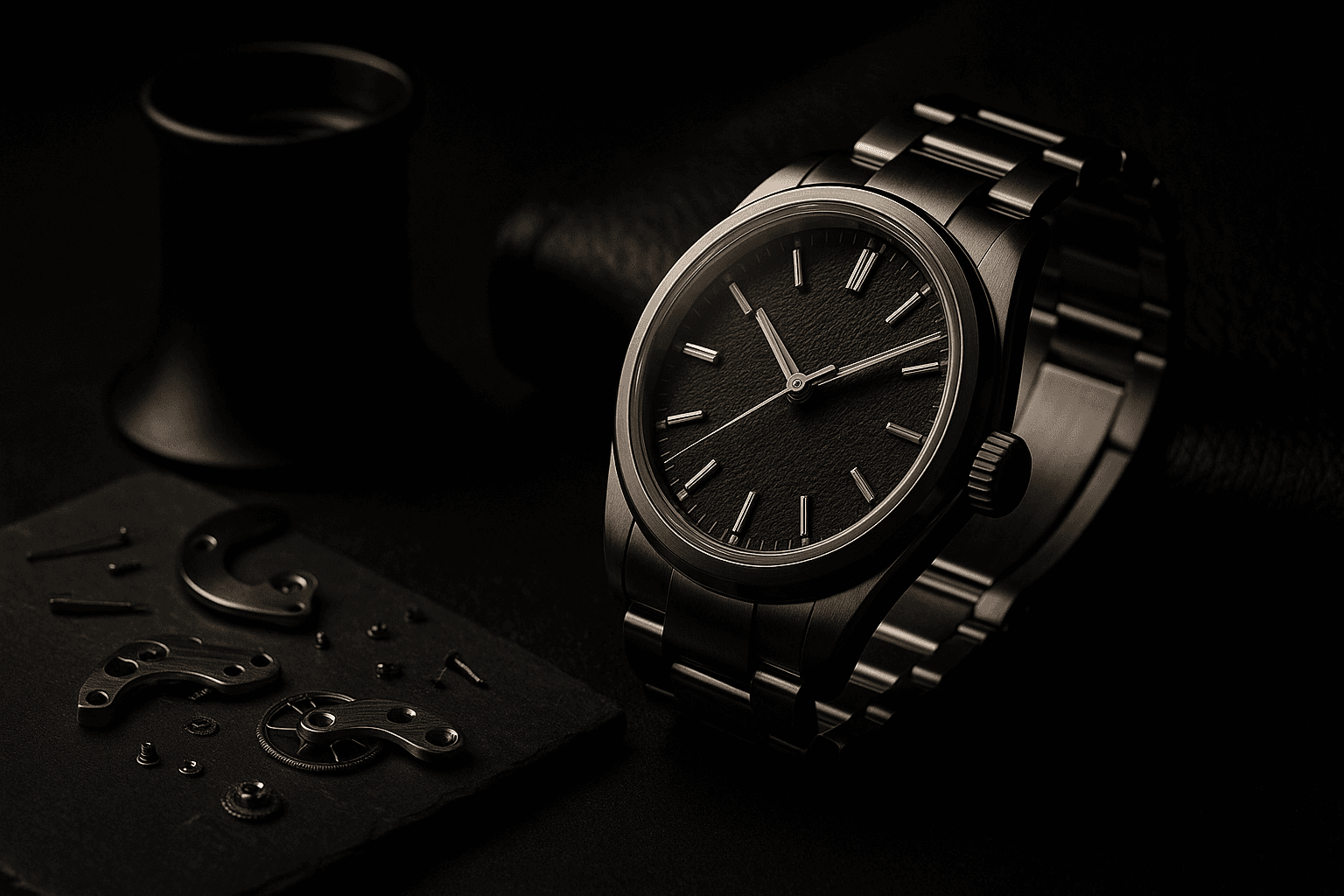
For a collector deciding where capital goes in 2026, the question of which Swiss marque is 'worth buying' rarely comes down to prestige alone. It comes down to whether a watch rewards the person who actually owns it — at the boutique counter, on the secondary market, and inside the case back.
Every marque below is judged on the same three axes rather than heritage marketing. Those axes are the allocation you can genuinely access, secondary-market behavior across the first years of ownership, and the depth of each maison's in-house movement pedigree.
What makes a Swiss watch marque worth buying in 2026?
Three things: allocation you can actually access, secondary-market prices that hold their value, and genuine in-house movement pedigree. A marque that fails on all three is a purchase, not a position.
What Worth Buying Actually Means in 2026
Before ranking anything, it helps to define the test the way a seasoned buyer would. Three factors decide whether a watch becomes an asset with a floor or simply a beautiful expense.
These axes are where the marketing and the market diverge. A brand can be revered and still be a poor purchase if you cannot buy it at retail or resell it without a loss.
- Allocation reality. This is whether you can walk in and buy the reference you want, or whether the marque runs multi-year waitlists that push buyers into the gray market. Access is a feature, and its absence is a real cost.
- Secondary-market behavior. This measures how a reference trades after purchase, tracked through platforms such as Chrono24 and dedicated market indices. Watches that hold or exceed retail protect your capital; watches that shed value quickly do not.
- Movement pedigree. This is the substance beneath the dial — in-house calibers, hand-finishing, and certifications like the Poincon de Geneve or a chronometer rating. Pedigree separates a lasting horological object from a fashion purchase.
The marques that satisfy all three sit at the top of the market for good reason. The ones that satisfy two out of three still deserve a place on a shortlist, provided you buy them for the right reason.
Tier One: The Trinity Still Sets the Ceiling
Patek Philippe, Audemars Piguet, and Vacheron Constantin remain the reference points against which every other maison is measured. All three combine deep movement pedigree with the strongest secondary-market behavior in the industry.
Patek Philippe leads on resale consistency, particularly for the steel Nautilus, and its finishing standards are enforced by the in-house Patek Philippe Seal. Understanding Patek's allocation reality is the practical barrier, because the most desirable references are effectively waitlist-only.
Audemars Piguet rides almost entirely on the Royal Oak, and demand for the integrated-bracelet icon has outrun supply for years. The story behind the Royal Oak's heritage explains why a 1972 design still dictates the brand's economics in 2026.
Vacheron Constantin is the quieter member of the group, and that is precisely its appeal. Its Overseas and Traditionnelle lines offer Trinity-grade finishing with shorter waitlists than Patek or AP, which can make it the most buyable name at the very top.
Are Patek Philippe and Audemars Piguet steel sports watches worth buying?
Yes, if you can secure allocation — the Nautilus and Royal Oak still command multi-year waitlists and secondary premiums, per Chrono24 listings. The scarcity is real, but so is the resale strength.
Tier Two: Rolex and the Allocation Problem
Rolex occupies a category of its own — not quite haute horlogerie, but the most liquid luxury watch brand on earth. Its steel professional models hold value better than almost anything outside the Trinity.
The problem is not the product; it is access. Persistent Rolex retail dysfunction means the Submariner, GMT-Master II, and Daytona are rarely available at authorized dealers without a purchase history or a long wait.
That scarcity feeds a gray market where buyers pay premiums that can erase the value proposition entirely. Buying a steel sports Rolex at list is one of the best deals in watches; buying the same watch at a gray-market markup is one of the worst.
For most buyers, the honest advice is to join a dealer waitlist and buy something else in the meantime. Chasing a hyped reference at any price is how a sound purchase turns into a loss.
Does buying a Rolex make sense in 2026?
At retail, yes; through the gray market, rarely. Steel sport Rolex references hold value well, but chronic allocation shortages push most buyers toward premiums that erase the retail advantage.
Tier Three: The Value Marques, Omega, Cartier, and Jaeger-LeCoultre
For collectors who want substance without the allocation theater, this tier is the most rational place to spend. Each of these marques sells serious watchmaking at listed retail, in stock, today.
The Omega Speedmaster remains the benchmark here, pairing genuine space-program provenance with the Master Chronometer-certified movements Omega now builds in-house. It rarely appreciates, but it holds a respectable floor and asks no waitlist of you.
Cartier has shifted from fashion-house perception to serious collector credibility, and collecting the Cartier Tank is now a mainstream horological pursuit. Its shaped cases and design lineage give it a distinct value that does not depend on a sports-watch premium.
Jaeger-LeCoultre is the connoisseur's value pick, a genuine manufacture that has long supplied movements to other prestige houses. The Jaeger-LeCoultre Reverso delivers Art Deco design and in-house calibers at a fraction of Trinity pricing.
Which Swiss marques give new collectors the best value?
Omega, Cartier, and Jaeger-LeCoultre deliver serious movements at listed retail with no waitlist. You accept steeper first-owner depreciation in exchange for buying exactly the reference you want, today.
Tier Four: The Independents Worth the Wait
At the top of the connoisseur market, independent watchmakers now command respect and prices that rival or exceed the Trinity. These are not entry points; they are destinations for collectors who already understand finishing.
F.P. Journe is the standard-bearer, and the F.P. Journe premium on the secondary market reflects genuine scarcity and a singular movement architecture. Allocation is relationship-driven, and the waitlist for a first piece can stretch for years.
Greubel Forsey operates at the extreme end of hand-finishing, producing only a few hundred watches a year with tourbillon work that has no mass-market equivalent. MB&F's Horological Machines take a different route entirely, treating the wristwatch as kinetic sculpture with strong and durable collector demand.
Beyond these names, independents like Voutilainen and Akrivia represent the finishing frontier for buyers who prize craft over recognition. This tier rewards patience and relationships far more than a credit card.
Are independent Swiss watchmakers a smart buy?
For finishing and rarity, yes — F.P. Journe, Greubel Forsey, and MB&F post strong secondary premiums, per auction results. Allocation runs on relationships, so entry is slow and often gated by prior purchases.
The Quiet-Value Marques: Breguet and Chopard
Two names reward buyers who care less about hype and more about horological substance. Both trade at a discount to their pedigree, which is exactly what makes them interesting.
Breguet carries arguably the deepest historical pedigree in all of watchmaking, yet collecting Breguet remains undervalued relative to its innovations and finishing. Chopard's high-watchmaking division earns similar respect, and Chopard's L.U.C line delivers Geneva Seal finishing at prices well below the Trinity.
Neither marque is a resale rocket, and that should be understood going in. They are watches to own for the object itself, with a dependable floor rather than an upside.
| Tier / Marque | Allocation reality | Secondary-market behavior | Movement pedigree |
|---|---|---|---|
| Trinity (Patek, AP, Vacheron) | Multi-year waitlists on hero models | Holds or exceeds retail | Highest, in-house seals |
| Rolex (steel sport) | Chronic shortages, gray-market premiums | Strong, above retail at list | Robust, chronometer-certified |
| Omega / Cartier / JLC | In stock at retail | Moderate depreciation, stable floor | Serious in-house calibers |
| Independents (Journe, GF, MB&F) | Relationship-gated, long waits | Strong premiums, thin liquidity | Frontier hand-finishing |
| Second-tier complications | Readily available, often discounted | Weakest resale, steep drop | Variable, often sourced |
The pattern is consistent across the table: access and resale move together at the top, then diverge as you descend. That is the core tension a 2026 buyer has to price in.
Where the Money Actually Goes Wrong
The fastest way to lose money in Swiss watches is to buy complication for its own sake from a second-tier maison. Complicated dress pieces without strong brand demand are the category that depreciates hardest.
Gray-market discounting is the second trap, because a watch bought well below retail often signals weak underlying demand. The ownership economics of servicing, insurance, and eventual resale compound these losses over any real holding period.
Which Swiss watches lose the most value after purchase?
Complicated dress pieces from second-tier maisons and heavily discounted gray-market stock tend to fall hardest, often to 40-60% of retail on resale, per secondary trackers. Movement pedigree cushions the drop.
A Note on Non-Swiss Comparisons
Two of the most-recommended alternatives to Swiss watches are not Swiss at all, and the distinction matters for this survey. A. Lange & Sohne is German, built in Glashutte, and the Lange Saxonia Thin rivals Trinity finishing while sitting outside the Swiss scope here.
Grand Seiko, Japan's answer to haute horlogerie, is a similar case of world-class value from beyond Switzerland. Both are worth a collector's attention, but neither belongs in a strictly Swiss ranking.
Editorial recommendation
If you are buying one Swiss watch in 2026, match the marque to your actual goal rather than the loudest brand. Our editorial view breaks down by intent.
- Capital preservation. A steel sports Rolex at authorized-dealer retail, or a Patek Nautilus if you can secure allocation, offers the strongest resale floor.
- Substance over status. Jaeger-LeCoultre, Cartier, or an Omega Speedmaster buys real movement pedigree with no waitlist and a stable floor.
- Connoisseur's endgame. F.P. Journe, Greubel Forsey, or an established independent rewards finishing knowledge and patience over easy liquidity.
- Undervalued pedigree. Breguet and Chopard L.U.C deliver Geneva-grade watchmaking at a discount to their own history.
Whichever tier fits, verify every price against secondary-market data before you transact, and buy the specific reference rather than the brand story.
Frequently Asked Questions
The questions below address the decisions that most often trip up buyers comparing marques. Each answer reflects secondary-market behavior as of 2026, which shifts and should be re-verified before purchase.
Is Rolex still worth buying at retail in 2026?
At authorized-dealer retail, yes — steel sport models still trade above list on the secondary market, per Chrono24 data. The obstacle is allocation, not value; most buyers face waitlists or gray-market premiums.
Which Swiss watch brands hold their value best?
Patek Philippe, Audemars Piguet, and Rolex steel sports models hold or exceed retail most reliably, per secondary-market trackers. The Rolex Daytona and Patek Nautilus have historically led resale, though premiums fluctuate.
Are independent watchmakers like F.P. Journe worth it?
For collectors who value movement finishing over brand recognition, yes. Independents such as F.P. Journe and Greubel Forsey command strong secondary premiums, but allocation is relationship-driven and waitlists can run years.
What is the best Swiss watch brand for a first serious purchase?
Omega, Cartier, and Jaeger-LeCoultre offer in-house or historically significant movements at accessible retail with no allocation games. They depreciate more than Rolex on resale, but you buy the watch you want at the price listed.
Do Swiss watches actually appreciate as investments?
A small subset does; most do not. Treat appreciation as the exception — steel Rolex sports, hyped Patek and AP references, and top independents — and treat the rest as luxury purchases with a resale floor, not assets.
Deciding Where Your Capital Goes
The Swiss marques worth buying in 2026 are the ones that survive all three tests, and only a handful clear every bar. The rest still earn a place, provided you buy them for the reason they actually reward.
For a deeper read on how these judgments are made, the Subdial collecting guides and our breakdown of auction estimate mechanics map the market a buyer needs to understand. Speak with a trusted dealer, verify the comps, and buy the watch you genuinely want to own.